Johnathan Bi
Read bullet-point summaries of Johnathan Bi essays and conversations on philosophy, Rene Girard, Nietzsche, stoicism, literature, and religion.
Episodes
-

I Visit a 15th Century Chateau (House Tour)
This episode documents a guided tour of the Château de Tocqueville in Normandy — the ancestral home where Alexis de Tocqueville wrote Democracy in America — led
-
What Gen Z Really Think About Capitalism | Tocqueville Seminar
Five students from Alpha School — a U.S. private school where an AI tutor compresses core academics into two hours a day, freeing students for entrepreneurial
-
The Terrible Actions of Odysseus in Troy | Harvard’s Gregory Nagy
This conversation between a podcast host and Harvard classicist Gregory Nagy explores the relationship between grief (penthos) and glory (kleos) in Homeric
-
This is Why Odysseus Loves Penelope So Much
The episode analyzes why Odysseus chooses Penelope over goddesses and princesses by comparing her to other women in the Odyssey, identifying three virtues that
-
How to Get Away with Anything | Odyssey Explained
This episode examines the contrast between Achilles and Odysseus as competing heroic ideals, using the Cyclops scene from The Odyssey to reveal how Odysseus's
-
All Alternate Endings of the Odyssey Explained
This episode explores what happens to Odysseus after the Odyssey ends, using four major Western "sequels" — the Telegony, Dante's Inferno, Tennyson's "Ulysses,"
-

This Decision was Worse Than You think | Odyssey Movie Review (Spoilers)
The reviewer has just seen Christopher Nolan's 2026 film adaptation of The Odyssey after spending three weeks reading Homer's epic in Ithaca, Greece; they judge
-
Homer Didn’t Write the Odyssey | Harvard’s Gregory Nagy Explains
This episode features Harvard classicist Gregory Nagy explaining his lifetime conclusion that the Iliad and Odyssey were not written by a single author named
-
This is the Most Toxic Religious Idea
This lecture explores Alexis de Tocqueville's analysis of the tense, mutually destructive yet mutually necessary relationship between Christianity and American
-
1776 vs 2026, Which America Was More Equal?
This lecture, delivered at the Château de Tocqueville for America's 250th anniversary, argues that the United States has undergone a historic inversion: from
-
The American Founders' Most Dangerous Idea | UT Philosopher Thomas Pangle
This episode is a conversation with University of Texas philosopher Thomas Pangle about the intellectual foundations of the American founding, exploring how the
-
The 4 Best Books to Prepare for AI (of the Hundreds I’ve Read)
The host argues that AI is not merely an economic disruption but a religious-level threat to the dominant modern faith: capitalism, work, and achievement.
-
Your Bible Mistranslated this Line, Here’s the Real Meaning | Rice Professor Jeff Kripal
Jeff Kripal, a Rice University professor of religion, argues that across many religious traditions, what is actually orthodox and encouraged is sublimated
-
“Don’t Care What Others Think” Is Terrible Advice | UT Philosopher Thomas Pangle
This is a conversation between a philosopher and a host exploring the tension between the active political life and the contemplative philosophical life, using
-
Why He Left Christianity For Hinduism | Rice Professor Jeff Kripal
Jeff Kripal, a Rice University professor of religious studies, spent his career studying extraordinary experiences across religious traditions—levitation
-

Why Men Must Live Dangerously | Nietzsche's Last Man Explained
Nietzsche's aphorism 283 in The Gay Science urges us to "live dangerously" — not primarily through physical risk, but through intellectual and creative daring
-
Uncovering the CIA's Secret Weapon: Psychic Spies
Project Stargate was a real, decades-long CIA and US Army program (1970s–1995) that investigated "remote viewing"—the use of claimed psychic abilities to gather
-
Only Violence Can Defend Freedom | Machiavelli Explained
Machiavelli's central political insight, as interpreted by Leo Strauss, is that principles must be violated in order to be actualized — not as hypocrisy, but as
-
The Secret Religion of Nietzsche | On Mysticism
Jeff Krial is a scholar of mysticism who argues that Nietzsche—and indeed all great thinkers—must be read primarily as mystical and religious figures, not as
-

The Ticking Timebomb Threatening Superpowers | $50B Founder James Liang
James Liang — co-founder of Trip.com (a $50B online travel company), former Stanford PhD student in demography, and professor at Peking University — argues that
-
He Studied Every Religion’s Miracles, His Conclusion Will Shock You
Dale Allison, a Princeton historian and New Testament scholar, argues that a wide range of "metanormal" phenomena—levitation, near-death experiences, terminal
-
We Have Arrived At The Final Philosophy, It is...
Axel Honneth, one of the most important living philosophers and a major figure in the Frankfurt School tradition of critical theory, argues that recognition is
-
You Need More Danger In Your Life | Machiavelli Explained
Machiavelli's core argument is that conquest is spiritually and morally necessary, not merely a geopolitical strategy. He warns that prolonged peace and luxury
-
The Devastating Wrong Turn in Early Christianity | Princeton Historian Explains
The episode features a conversation with a prominent Princeton historian of early Christianity who argues, on historical-critical grounds, that Jesus never
-
The Incredible Results of AI Learning | Alpha School
Alpha School is a K–12 school that replaces all academic teaching with AI tutors, enabling students to master core subjects in just 2–3 hours per day while
-
How To Be a Thinker & a Doer At The Same Time
Jim O'Shaughnessy is a legendary Wall Street investor, writer, and philanthropist whose career spans four acts: self-education in the humanities, building a
-

I Visit My Ancestral Home in China For the First Time
The speaker visits their ancestral home in China for the first time, tracing the legacy of their ancestor Chinati (also spelled Chundiati/Chundati), a renowned
-

Nietzsche on How Place Affects Ideas
The speaker describes a new mode of studying that combines travel to the places where ideas were formed with reading the texts in those locations, arguing that
-
This is How I Fell in Love with Machiavelli | Q&A
This is a Q&A session following a lecture on Machiavelli's ethics, where the speaker (Jonathan) fields audience questions about Machiavelli's intentions, moral
-
Power Will Cost You Everything, It’s Worth It
This lecture presents Niccolò Machiavelli not as a simple "teacher of evil" but as a radical political thinker who argues that good people make terrible
-
Capital is Cheap, This is The Last Source of Scarcity
Why this moment is a civilizational turning point
-
Globalism is an Elitist Ideology | Princeton’s Maurizio Viroli
Maurizio Viroli, a Princeton political theorist and former consultant to the president of Italy, argues that patriotism—love of one’s country grounded in
-
Why Ugly People Turn Evil | Frankenstein Explained
Mary Shelley's Frankenstein is often read as a social commentary — that the monster becomes evil only because society rejects it for its ugliness — but the
-
The Forgotten 11th Commandment | Princeton’s Maurizio Viroli on Machiavelli's God
Machiavelli was not anti-Christian but championed a "republican Christianity" that prioritized patriotism, liberty, and this-worldly action over meekness and
-

Philosophy as Food: My Favorite Machiavellian Idea
The speaker visits Machiavelli's place of exile in Tuscany, where Machiavelli wrote The Prince and other works, and reflects on a famous private letter
-

Nietzsche Went on This Hike Every Day | Zarathustra Explained
Nietzsche wrote the third part of Thus Spoke Zarathustra while hiking daily between the coast near Nice and the mountaintop village of Èze in the mid-1880s, and
-
Rebel Oxford Philosopher Declares War on Universities
Michael Gibson is a venture capitalist and co-founder of the 1517 Fund who wants to dismantle the university system, which he calls part of the "paper belt" — a
-
How to Defend Liberty | Joe Lonsdale’s Political Philosophy
Joe Lonsdale — co-founder of Palantir, founder of the Cicero Institute, and builder of multiple defense and technology companies — argues that America's core
-
Why This American Capitalist Loves Marx | $16 Billion Guidewire Founder, Marcus Ryu
Marx, alienation, and building a company that tried to be different
-
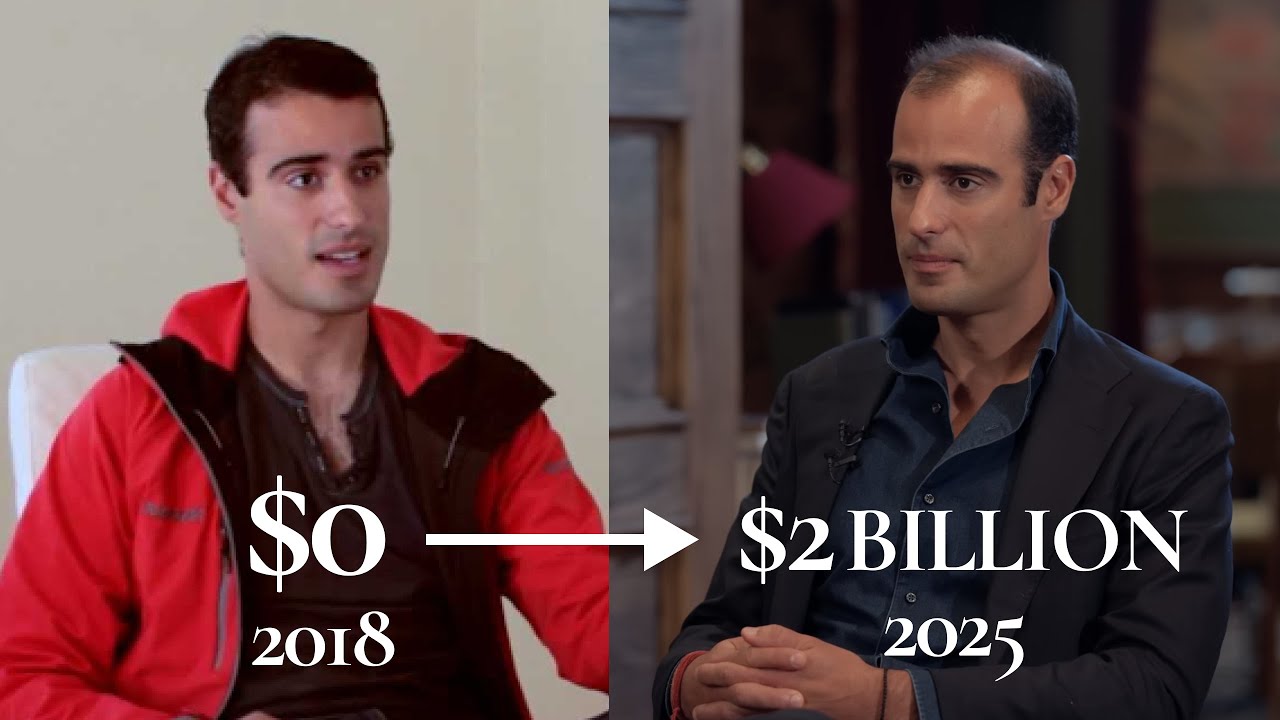
Same Interview, 8 Years Later
A decade after their first conversations, Francis Pedraza and Jonathan reunite to reflect on how Francis's philosophical convictions shaped his journey from
-
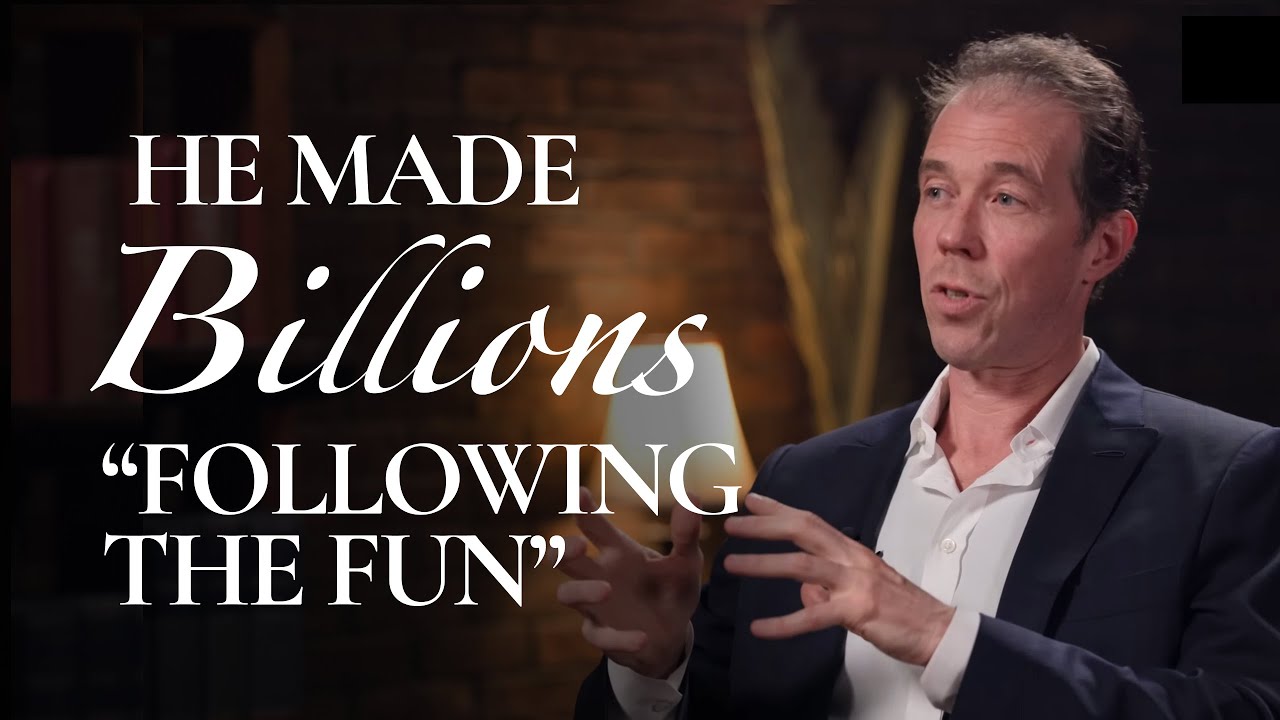
Capitalism’s Best Kept Secret: Follow the Fun | Colin Moran, Oxford History
Colin Moran is a hedge fund manager whose unusual path to sustained success—running one of Wall Street's best-performing funds for two decades—stems not from
-
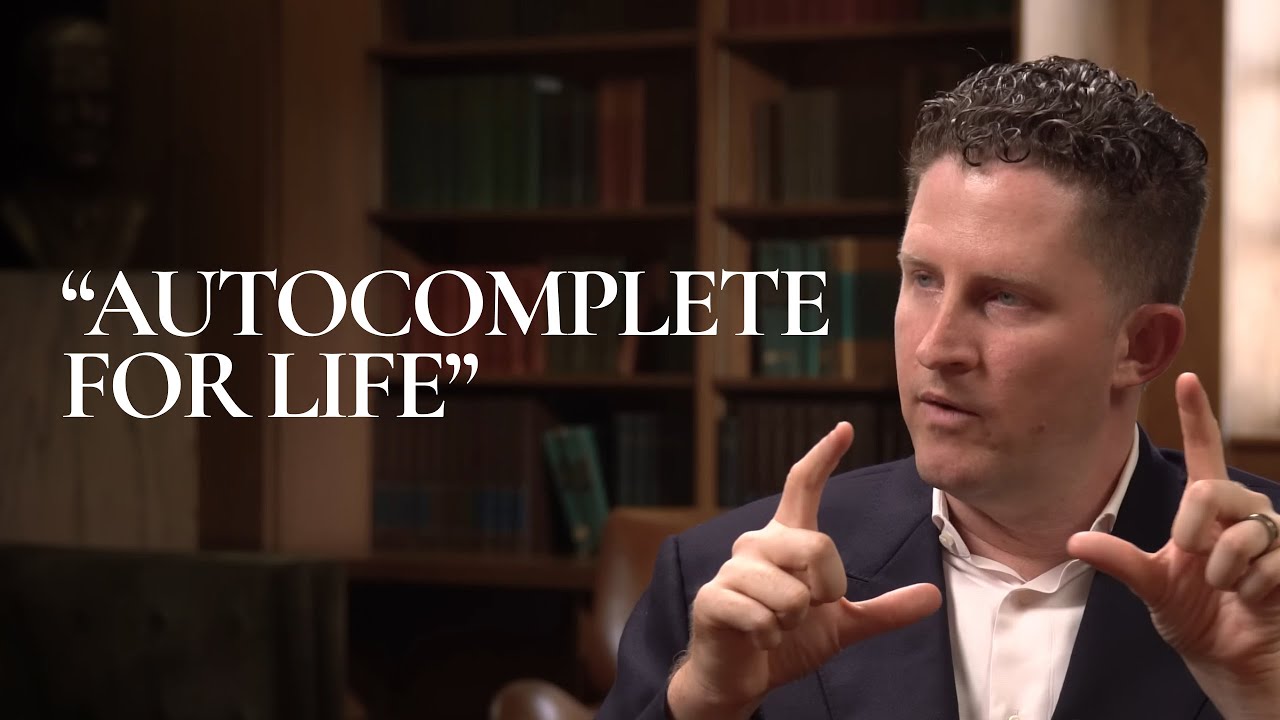
The Real Risk of AI No One is Talking About | Brendan McCord
The dominant schools of AI thought both fail on human autonomy
-
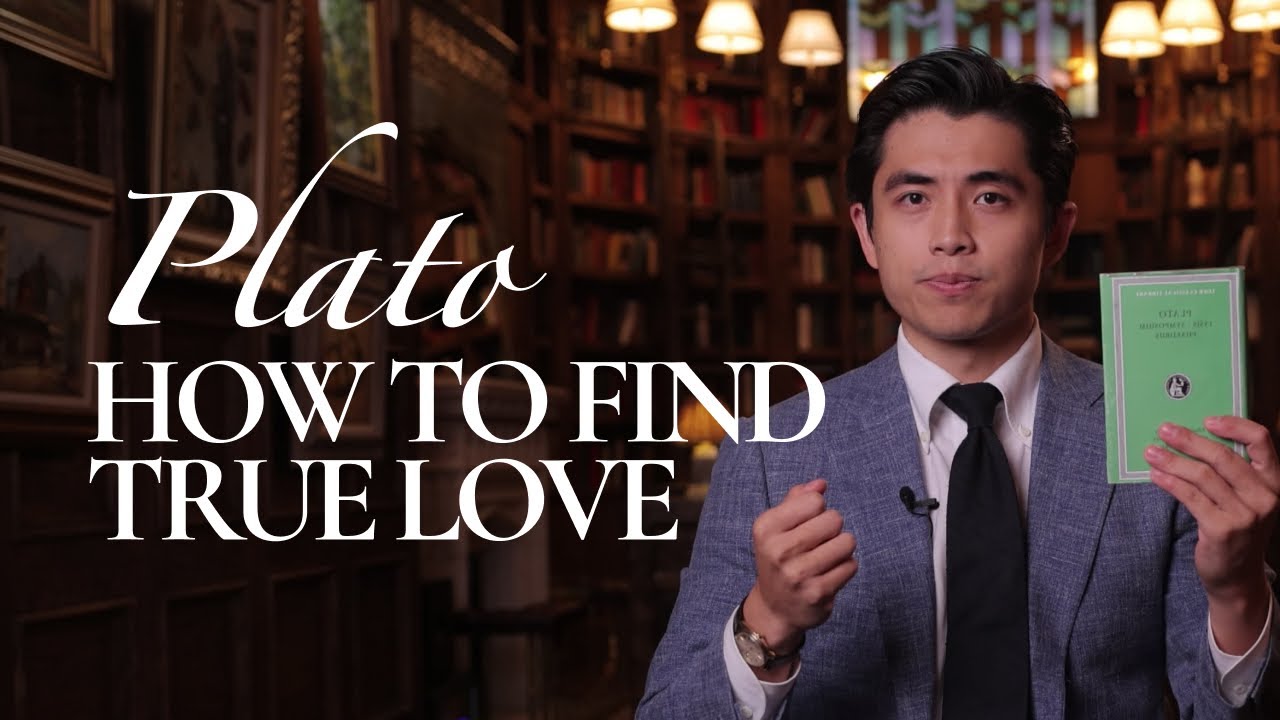
Everybody Gets This Wrong in Modern Dating | Plato’s Symposium Explained
Plato's Symposium is the greatest treatise on love in the Western canon, and it challenges nearly everything modern culture assumes about romance, beauty, and
-

This is the Terrible Cost of Doing Philosophy
The episode explores the relationship between political exile and philosophical greatness, using Machiavelli's life as a central case study and Plato's Republic
-
True Christians Embrace the Erotic | Notre Dame's David O’Connor
David O'Connor, a philosophy professor at Notre Dame, argues that modern dating is in crisis because young men and women have lost confidence in their erotic
-
Why You Must Acquire Power at All Costs | Harvard’s Harvey Mansfield on Machiavelli
Harvey Mansfield argues that Machiavelli is the true founder of modernity — not merely a clever political commentator or an immoral schemer, but the architect
-

Knowledge is More Seductive Than Sex
The episode is a philosophical meditation recorded on the Italian islands of Li Galli, traditionally identified as the home of the Sirens from Homer's Odyssey.
-
AI & The End of Education
A panel at St. John's College featuring Brendan McCord (Cosmos), Hollis Robbins (University of Utah), and Zena Hitz (St. John's), moderated by Jonathan
-

You Can Be Happy, Even If You Are Rich
The speaker's favorite line from Marcus Aurelius' Meditations is "Happiness is possible even in a palace," which he rephrases as "Happiness is possible even if
-

My Name is Aristotle
While studying ancient Greek in Greece, the speaker discovered that his Chinese name literally translates to the same meaning as the Greek name Aristotle
-

Philosophy is the Last Subject Worth Studying
The speaker argues that philosophy is becoming the most important subject to study in the age of AI, and may be the last discipline that remains irreplaceable
-
Oxford’s AI Chair: The Singularity is Bullshit
Marcus du Sautoy, Oxford's Simonyi Chair for the Public Understanding of Science, argues that the popular "singularity" narrative — the idea that AI will
-
Oxford's AI Chair: LLMs are a HACK
The episode features Michael Wooldridge, Oxford's AI Chair, arguing that large language models (LLMs) are best understood as engineering hacks rather than
-
How to Live a Virtuous Life | Cornell’s Rachana Kamtekar on Plato
This is an interview with Rachana Kamtekar, a philosopher specializing in ancient ethics, focusing on Plato's theory of virtue and how it compares to Stoicism
-
This Drove Me Away from Stoicism
A systematic critique of Stoicism — both popular and classical — arguing that its core doctrines are self-defeating, unlivable, and ultimately grounded in an
-

Why Socrates Hated Books (and why it matters for AI)
About one-fifth of daily life is already mediated by AI, from social media feeds to dating apps, and this share is growing rapidly as AI becomes more capable.
-
Why You Do Things You Know You Shouldn’t | Rachana Kamtekar on Plato’s Moral Psychology
Plato, as interpreted by Cornell scholar Rachana Kamtekar, offers a radical rethinking of why we do things we know we shouldn't—arguing that we never truly act
-
One Argument to Destroy All Philosophical Positions | Tad Brennan on Ancient Skepticism
Sextus Empiricus and the radical promise of ancient skepticism — Sextus Empiricus (c. 200–250 AD), a Greek physician-philosopher of the Pyrrhonian school
-
What Everyone Gets Wrong About Stoicism | Tad Brennan on Stoic Determinism
The Stoics held two seemingly contradictory beliefs: that the universe is fully determined by fate (the causal network of Zeus), and that our beliefs, desires
-
Human vs. Machine Consciousness | Imperial’s Murray Shanahan
Murray Shanahan, a professor at Imperial College London and AI researcher, argues that investigating whether AI systems are conscious is not just a
-
The AI Use-Case No One is Talking About | Reid Hoffman
Reid Hoffman argues that the true "killer app" of AI will not be single-player chatbots like ChatGPT, but a "multiplayer social" layer — a field of AI agents
-

How to NOT be Scapegoated | René Girard's Mimetic Theory
René Girard's mimetic theory explains scapegoating as a deep evolutionary mechanism in human societies, not a pathology limited to "evil" groups. When
-

How Mimetic Desire Actually Works
This episode goes deeper into René Girard's mimetic theory to answer three practical questions about how mimesis actually operates in everyday life: who is more
-
Why Stoicism Doesn’t Work Without God | Tad Brennan on Stoic Ethics
Stoic ethics is inseparable from Stoic theology — Tad Brennan, a Cornell philosopher and leading Stoic scholar, argues that the core ethical claims of Stoicism
-

Girard's Major Blindspot | Limitations of Mimetic Theory
The episode examines the major blind spots of René Girard's mimetic theory—a framework for understanding human desire as imitative and socially driven. While
-
The Slave Who Was Free | Berkeley's AA Long on Epictetus
Epictetus was born a slave in first-century Anatolia, brought to Rome as a young man, studied under the Stoic philosopher Musonius Rufus, was eventually freed
-

Girard Predicted US-China Trade War, What Comes Next is Terrifying
In 2007, at the peak of Sino-American optimism, French philosopher René Girard predicted in his final book Battling to the End that a trade conflict between the
-
Lessons from the Two World Wars | Martha Nussbaum on Britten’s War Requiem
Martha Nussbaum discusses Benjamin Britten's War Requiem, a 1962 choral work composed to rededicate Coventry Cathedral after its WWII bombing, which interweaves
-
Stoics vs. Skeptics vs. Epicureans | AA Long on Hellenistic Philosophy
Hellenistic philosophy — comprising Stoicism, Epicureanism, and Skepticism — emerged after Aristotle's death across the Mediterranean world and is united by a
-
Democracy is Anarchy | Berkeley’s GRF Ferrari on Plato's Republic
Plato's Republic is one of the foundational texts of Western philosophy, yet it is deeply hostile to the values the modern West holds most dear—democracy
-
Don’t Believe AI Hype, This is Where it’s Actually Headed | Oxford’s Michael Wooldridge | AI History
Michael Wooldridge, a veteran AI researcher at Oxford and pioneer of agent-based AI, argues that the history of AI—from Turing to today's large language
-
Focus on These AGI-Proof Areas | Nick Bostrom
Nick Bostrom, philosopher and author of Deep Utopia, discusses what the good life looks like in a world of full technological maturity—a state where
-
AI’s New World Order: US-China, War, Job Loss | Tyler Cowen
A wide-ranging conversation with economist and public intellectual Tyler Cowen on how AI is reshaping geopolitics, economics, knowledge work, and daily life
-
Plato’s Warning Against Friends-with-Benefits | GRF Ferrari on the Phaedrus
Plato's Phaedrus tackles a question that sounds strikingly modern: is it better to have sex with someone who loves you or with someone who doesn't and therefore
-
Making Sense of Christianity's Violent Past | Yale’s Carlos Eire
Carlos Eire is a Yale historian and practicing Catholic who has spent his career studying Christianity's violent and paradoxical history — the Crusades, the
-

How to Handle Criticism: A Philosopher's Guide
The speaker reflects on handling criticism after publishing online content, where long-form videos receive mostly positive comments while short-form content
-

Great Thinkers are NOT Great Scholars
Many of history's most celebrated thinkers—Heidegger, Nietzsche, Girard, Augustine—were, by modern scholarly standards, bad scholars: they misread, distorted
-

The Renaissance Method for Language Learning
The speaker spent summer 2024 studying ancient Greek in Greece through a fully funded program at Ralston College, and is sharing the experience to encourage
-
Think Like a Philosopher King | Stoic Wisdom from Marcus Aurelius' Meditations
Marcus Aurelius was the Stoic philosopher-king who ruled Rome during one of its most turbulent periods — barbarian invasions, plague, and rebellion — yet led
-

"Don't Care What Others Think" is Terrible Advice, Do This Instead
The speaker argues that the popular self-help advice to "stop caring what other people think" is both impossible and counterproductive, because humans are
-

I No Longer Fear AI Replacing Me, I Welcome It
Jonathan, a philosopher and content creator, reflects on why he initially felt threatened by AI and why he no longer does, using the shift as a lens to examine
-
The Surprising Evidence for Christian Miracles | Yale Historian Carlos Eire
This is a conversation between host Shamil and Yale historian Carlos Eire about Eire's book They Flew, which investigates the historical evidence for human
-
The Surprising Source of Shakespeare’s Inspiration | Harvard’s Stephen Greenblatt
Stephen Greenblatt, one of the world's foremost Shakespeare scholars, argues that Shakespeare's genius cannot be reduced to a single explanation but emerges
-
How Shakespeare Became Upper Class | Harvard's Stephen Greenblatt
Stephen Greenblatt, one of the foremost Shakespeare scholars, discusses Shakespeare's intense social ambition — how the greatest playwright in history spent
-
Shakespeare's Urgent Warning to America | The Tragedy of Julius Caesar Explained
Shakespeare's Julius Caesar is not merely a historical drama about the fall of the Roman Republic—it is a mirror held up to contemporary America, revealing how
-
Rational Inquiry Harms Society | Christopher Kelly on Rousseau
Jean-Jacques Rousseau, one of the Enlightenment's greatest thinkers, argued that free speech, rational inquiry, and philosophical investigation can be deeply
-
Nietzsche: There is No Objective Right or Wrong | Brian Leiter
Brian Leiter, a leading Nietzsche scholar and philosopher, explains Nietzsche's moral anti-realism — the view that there are no objective moral facts, only
-
Why The Poor Support Inequality | Rousseau's Second Discourse Explained
Rousseau's Second Discourse argues that inequality is not natural but is instead a product of civilization, driven by a psychological drive he calls
-
The Surprising Politics of Roman Epicureans | Columbia's Katharina Volk
Epicureanism is a Hellenistic philosophy founded by Epicurus in the late 4th century BCE, centered on the idea that the highest good (summum bonum) is
-
How to Combine Contemplation & Action | Katharina Volk on Cicero & Caesar
The late Roman Republic was a rare historical period when the leading political figures—men like Cicero and Caesar—were also the leading intellectuals
-
Shakespeare's Advice to People in Love | Harvard's Stephen Greenblatt
Shakespeare is often thought of as the great playwright of love, but his actual view of romance is far bleaker than the popular image suggests. His plays
-
Stoicism is a Coping Mechanism | Katharina Volk on Cato
Stoicism as a coping mechanism in the late Roman Republic: This episode examines stoicism not just as abstract philosophy but as a lived practice during one of
-
The Surprising Reason Why Plato Hated Innovation
For most of Western history, "innovation" was a term of abuse — in the 17th century, one of the worst things you could call someone was an "innovator." Today
-
Nietzsche's Warnings for Modern Man | UChicago's Robert Pippin
Nietzsche's warning for modern life: Robert Pippin, a leading philosopher at the University of Chicago, argues that Nietzsche diagnosed a crisis at the heart of
-
Columbia Professor Teaches the Art of Self-Esteem | Fred Neuhouser on Rousseau
Fred Neuhouser, a Columbia professor and leading Rousseau scholar, explains Rousseau's concept of amour-propre — the deep human drive to seek esteem, respect
-
Rousseau's Urgent Warning for Modern Society | Chris Kelly
Christopher Kelly, a leading Rousseau scholar, argues that heroes are not optional ornaments but the very foundation of political community—and that the modern
-
How Intellectuals Poison Society | Rousseau's First Discourse Explained
Rousseau's Discourse on the Arts and Sciences (the First Discourse) argues that the advancement of science, philosophy, and art has corrupted human souls rather
-
Reject Free Will, Become Who You Are | Brian Leiter on Nietzsche
Nietzsche's radical rejection of free will is central to his philosophy, not a peripheral curiosity. He denies both major philosophical camps—compatibilism
-
Masters vs. Slaves | Nietzsche's Genealogy of Morality Explained
Nietzsche's On the Genealogy of Morality is a radical critique of modern moral values—altruism, equality, compassion, humility—which he sees as products of a
-

The Great Books | Trailer
This episode is a trailer for a lecture and interview series called The Great Books, which aims to guide listeners through the most influential works of Western
-
Girard Predicts Apocalypse | Mimetic Theory
René Girard's final lecture argues that humanity is marching toward an inevitable apocalypse driven by violence, because Christianity exposed and dismantled the
-
The Far-Right is Satan, The Far-Left is Anti-Christ | Girard's Mimetic Theory
This lecture examines modernity through the lens of René Girard's mimetic theory, arguing that Christianity has unleashed four powerful forces into
-
This Single Perspective Makes Christianity Unique | Girard’s Apologetic
René Girard offers a radical reinterpretation of Christianity as the one true religion—not because of miracles or metaphysics, but because it uniquely exposes
-
Society is Founded on a Lie | Girard’s Scapegoat Explained
René Girard's philosophy of history argues that all human societies are founded on a violent, deceitful mechanism he calls the scapegoat mechanism—a four-step
-
If You are Competing, You Already Lost | Girard’s Mimetic Rivalry Explained
The problem with modern theories of human nature
-
-
Introduction to Mimetic Theory | René Girard
This is the first lecture in a seven-part series on the mimetic theory of René Girard, presented by Jonathan B and moderated by David Perrell. The series aims