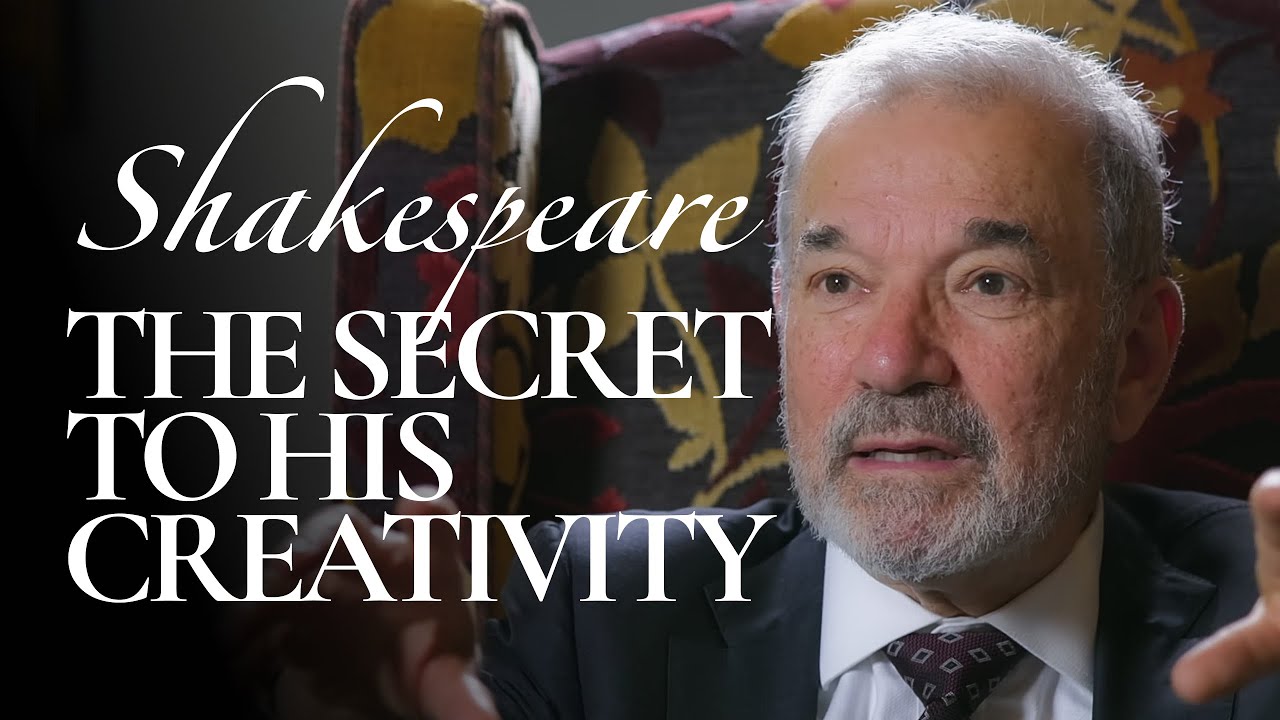
This episode features Harvard professor Stephen Greenblatt explaining the sources of Shakespeare’s genius: not original plots but a rare combination of poetic intelligence, deep human understanding, strategic opacity in adapting sources, immersion in both high and low culture, and the transmutation of personal grief (his son Hamnet’s death) into Hamlet through the suppressed Catholic doctrine of purgatory.
The theatrical world Shakespeare entered
London’s civic authorities opposed theaters for disrupting order and spreading plague, so playhouses clustered in “Entertainment Districts” outside their jurisdiction, especially south of the Thames.
These districts mixed theater with brothels, bear-baiting (blinded bears tied to stakes attacked by dogs), and chaotic spectacles — one visitor described a “play” featuring dogs, bears, a horse, a bull, dancing, fireworks, and a burning rose raining apples.
The violence of bear-baiting bled into the drama: Macbeth says “I’m tied to the stake and I must fight,” licensing himself to a baited bear; Ben Jonson’s plays were performed in venues that still smelled of bear.
Greenblatt suggests a disturbing continuity between the spectacle of tormented animals and the staged cruelty of high tragedy.
Fellow playwrights and the collaborative world
Shakespeare’s contemporaries came from wildly different backgrounds: Thomas Lodge (son of the Lord Mayor), Thomas Nashe (vicar’s son, Cambridge), Christopher Marlowe (cobbler’s son, Cambridge, training for priesthood), Robert Greene (Cambridge and Oxford degrees).
A sharp class divide separated university men (who claimed gentleman status) from non-university writers like Shakespeare and Thomas Kyd.
Greene, dying destitute at ~32, attacked Shakespeare as an “upstart crow beautified with our feathers” — accusing him of stealing their glory.
Greene lived a dissolute life (abandoned wife, criminal associates, public drunkenness, staged repentances) and partly inspired Falstaff.
Most playwrights collaborated (like TV writing rooms); computer analysis suggests Shakespeare co-wrote early Henry VI plays with Marlowe and possibly a third writer, but later worked largely alone.
Shakespeare kept his distance: married, cautious, aware of the dangers — Marlowe’s atheism, homosexuality, and political subversion made association risky; Shakespeare “was not a company keeper.”
Imitation, education, and the culture of memorization
Shakespeare borrowed plots freely — from Plutarch, Holinshed, Greene’s stories — because copyright didn’t exist and “originality” wasn’t the measure of genius; the 18th-century invention of copyright created the modern cult of originality.
Grammar-school education relied on brutal rote memorization, relentless drills, imitation exercises, and corporal punishment (Latin learning “inseparable from whipping”).
This trained ordinary audiences to process extremely complex syntax and metaphor — they listened to millions of sermons and memorized vast amounts of verse.
Greenblatt: Shakespeare’s verbal richness works because his audience could handle it; reading Shakespeare is harder than hearing it because we’ve lost that processing capacity.
Memorization builds poetic sensibility — rhythm, taste, internalized structure — even if resented at the time (Greenblatt hated it; Bill Clinton still recites Macbeth from high school).
Hamlet, Hamnet, and strategic opacity
Hamlet represents a step-change in Shakespeare’s tragedy — deeper interiority, more of Shakespeare’s “inside” transferred into the work.
Shakespeare’s only son Hamnet died at 11 in 1596; “Hamnet” and “Hamlet” were interchangeable names (neighbor Hamnet Sadler appears in records as Hamlet Sadler).
The play emerged years later, not immediately — Greenblatt’s Hamlet and Purgatory argues it processes the cultural trauma of the Reformation’s abolition of purgatory.
Protestant reformers declared purgatory a fraud and banned prayers for the dead, but the feeling — the need to stay in relation to the dead — persisted.
The Ghost in Hamlet describes a place where sins are “burned and purged away” without naming purgatory (censorship); he demands remembrance, embodying the suppressed Catholic practice.
In Saxo Grammaticus’s source, young Hamlet feigns madness strategically to survive until he can avenge his father — the motive is clear.
Shakespeare removes that clear motive: his Hamlet feigns madness but it draws attention, making no tactical sense. Greenblatt calls this “strategic opacity” — Shakespeare identifies the clarifying element in his source and throws it away, forcing the audience to ask “why?” and internalizing the reason as psychological depth.
This refusal of easy consolation mirrors Shakespeare’s own unresolved grief for Hamnet.
The source of Shakespeare’s genius
Greenblatt summarizes: intimate familiarity with the greatest literary masterpieces plus superhuman sensitivity to his own life experiences.
Greenblatt adds two pieces: (1) Shakespeare absorbed everything — not just masterpieces but “junk,” bear-baitings, street life, low culture — enabling him to write both aristocrats and peasants authentically. (2) His sensitivity operated on two levels: the deep interior (cutting pieces of himself into the work) and the teeming world around him (Greene, Nashe, Marlowe, the bread-seller, the room-cleaner).
The combination — total cultural range, collaborative pragmatism, business acumen (shareholder in the company and the Globe), strategic opacity, and the transmutation of personal loss through suppressed cultural forms — produced a genius that remains unmatched.