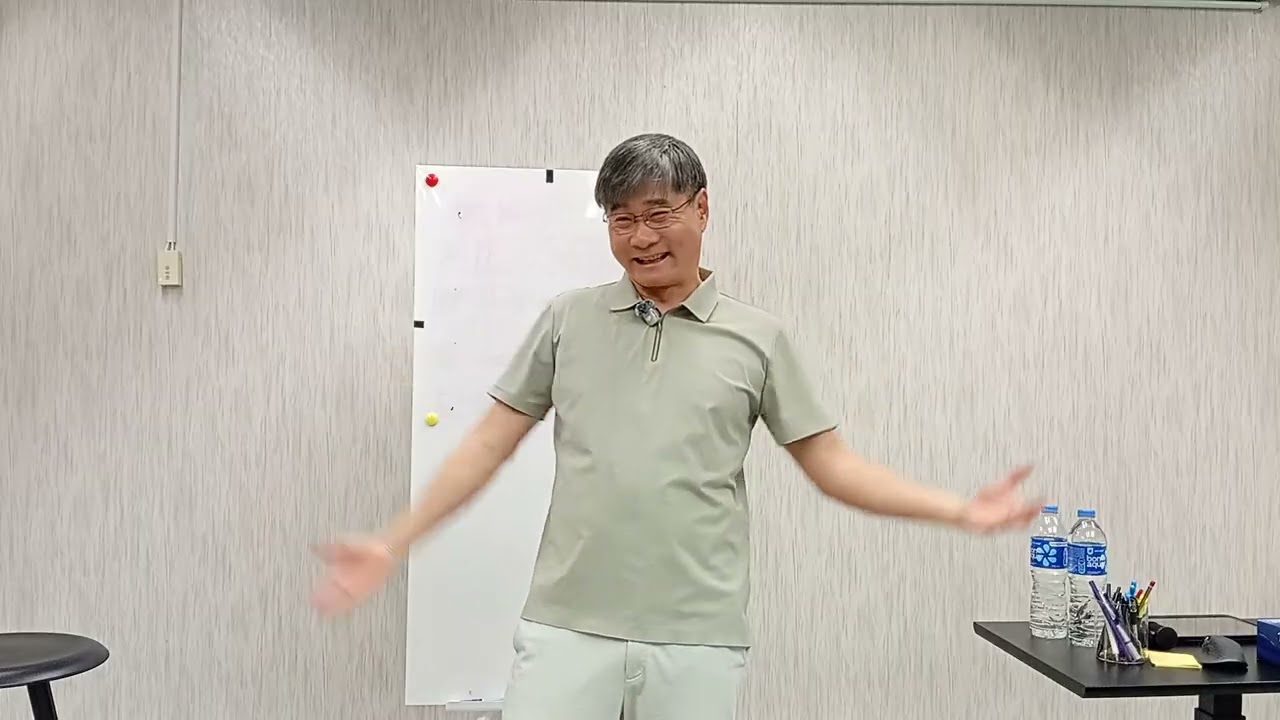
Professor Jiang delivers a lecture in Hong Kong on the occult origins and failures of meritocracy, drawing on his personal journey from a poor Cantonese fishing village to Yale on a full scholarship, and argues that the meritocratic system — built on IQ testing, elite universities, and a Freemasonic-Kabbalistic eschatology — harms children, suppresses true intellectual life, and is now being replaced by AI-driven surveillance; he proposes an alternative education centered on nature, cosmology, great books, and the parent-child bond.
Personal story and the substitute teacher who changed his life
Born in Taishan in 1976 at the tail end of the Cultural Revolution; father immigrated to Toronto and worked as a dishwasher his entire life.
Arrived in Canada at age six speaking no English; spent first grade daydreaming and learning nothing; teacher recommended he repeat kindergarten.
Mother, though uneducated, asked him what he wanted; he chose grade two despite the teacher’s warning; struggled with bullying, cheating, and academic failure but values the autonomy to make his own mistakes.
In grade 10, a substitute teacher — an intern in her early 20s — took him aside for 10 minutes and asked where he wanted to go to college; told him he was special and could climb to great heights if he worked hard.
He believed her, transformed over three years, and won a full scholarship to Yale in 1995; initially saw this as proof meritocracy works.
Three critiques of meritocracy
Unfairness disguised as fairness: Meritocracy claims to reward talent but heavily discriminates for high IQ and good memory via standardized tests (SAT), discarding children with other gifts — emotional intelligence, curiosity, passion, craftsmanship — that matter more in life.
Anti-intellectualism at elite universities: Yale and Harvard have become conveyor belts for investment bankers, lawyers, and doctors; students avoid failure, debate, and curiosity to protect perfect resumes; few public intellectuals emerge despite vast resources.
Involution and the death of childhood: Acceptance rates plummeted (Yale from 20% in 1995 to ~5% today); parents build resumes from birth; children lose play, freedom, and mental health; the same pressure exists in the West where students burn out, skip class, and self-medicate.
Historical and occult roots of the meritocratic project
Medieval Europe taught a fallen world requiring penance; the Protestant Reformation unleashed repressed desire for individual freedom and truth, creating modernity’s radical idea: humans can become God and build paradise on earth.
This eschatology derives from the Kabbalah, which applies Gnostic philosophy (consciousness precedes matter) to Scripture: God created the world to know itself; human egotism broke it; repair comes through redeeming reason.
Freemasons adopted this: reason becomes God; a “temple” of perfect cubes (rational individuals) built via IQ and standardized testing will perfect society.
James B. Conant (Harvard president) and Henry Chauncey (first ETS president) created the SAT to find the “best and brightest”; both were pilgrim descendants and likely Freemasons; IQ, originally a threshold concept by Binet, was turned into a sorting standard.
When meritocracy produced inequality instead of reason, the architects blamed external factors — family, culture, race — and sought to remove their influence; now they pivot from schooling to AI (e.g., Facebook’s Muse) to engineer reason directly.
Why current educational assumptions are wrong
Blank slate: Children are not empty vessels to be filled; they arrive with an intimate connection to the divine, infinite consciousness, and a pre-existing purpose.
Mini-me: Parents project their unfulfilled ambitions onto children; but children have their own character and destiny — e.g., his middle son Bo would “rather die than not be him.”
Critical thinking as taught: Schools teach reduction and categorization, not true creativity; great scientists (Newton, Einstein, Galileo) relied on imaginative leaps and “channeling,” not the scientific method.
Children as spiritual beings with purpose
Young children exhibit consciousness beyond their expressive capacity (e.g., his daughter slapping her brother then babbling an explanation before realizing she couldn’t speak).
Children are excellent judges of character, uncorrupted by social self-deceit; they know who to trust.
A doctor’s observation: over decades, patients’ entire lives prepared them to care for the specific child they would have; the child’s soul chose parents best equipped to help fulfill its purpose.
Parents are the best experts for their own children; society should structure itself around the parent-child bond, not deference to institutional authority.
Alternative educational vision: nature, occult, great books
Nature: The best teacher; great scientists grew up on farms observing the mind of God in birds, trees, food systems; cities are abstractions that sever this intuition; a self-sufficient, off-grid school community would let children see the cosmos in a village.
Occult / cosmology: Every human carries three questions — Where do I come from? Why am I here? Where am I going? Teaching comparative religion (Kabbalah, Hindu, Buddhist, Taoist, Shinto) reveals a shared narrative: we come from the Source, seek to return, and should seize the day with gratitude.
Great books: Bible, Dante, Homer, Shakespeare, Milton are spiritual portals into divine consciousness; reading them aligns the mind with God; Jiang’s students in China, despite language barriers, connected deeply with Dante, Homer, Plato.
Goal: schools that help each child discover their purpose and nurture the parent-child bond, producing intellectuals, artists, and thinkers to lead humanity forward.
Q&A highlights: great books, Freemasonry, system collapse, and spiritual practice
Great books belong to everyone: Elite universities have abandoned them; poets like Dante wrote in vernacular to democratize truth; YouTube proves wide appetite for great books beyond elite circles.
Freemasonry as religion of capital: Merchant class needed new constituencies to overthrow aristocracy; cloaked transnational capital in “reason” (vs. emotion/tradition); created science, meritocracy, now AI as mechanisms to spread reason; mechanisms corrupt the ideas they carry.
Reason vs. emotion in Kabbalah: Reason is the divine spark (God’s breath in Adam); meritocracy filters for it; those without it are “eliminated”; AI now replaces schooling as the tool to impose reason universally.
Coming system collapse and new models: Not a transition but a total breakdown; emerging forms include AI surveillance states, network states (corporate-run, à la Peter Thiel), city-states (Hong Kong, Singapore), religious/Messianic cults; flexibility and creativity will outcompete rigid systems.
World War III already underway: Historians will simplify; current wars (Iran, Ukraine), supply chain disruption, inflation, famine signal it; China will “turtle up” (insular, avoid conflict) while West is driven by Messianic eschatology.
Having children as ego death and purpose: Jiang’s difficult life (trauma, Yale alienation, failed journalism career) resolved when children shifted his focus from self-proving to service; fame at 50 doesn’t corrupt because ego died; family is the unique cosmic experience (per Homer’s Odyssey).
Digital ID/currency via crisis: Banks lose money-printing power to tech corporations; a global economic collapse + UBI rollout would force adoption of digital currency/ID; surveillance already tracks movement, associations, metadata to build psychological profiles.
Spiritual journey is individual: No guru can give truth; each must climb out of Plato’s cave, choose the red pill, endure identity crisis; Jiang refuses to start a cult (all become sex cults; impose will; defeat the point).
Cult prevention: Openness, transparency, public predictions as accountability; if predictions fail, ignore him; his model predicts Trump third term as litmus test.
Southeast Asia vulnerable: Too many people, too few resources (water from Tibetan Plateau controlled by China), ethnic conflicts; water wars within 10 years.
Manifestation vs. sensitivity: Not a reality-distortion field like Jobs/Trump; his gift is sensitivity — knowing others’ thoughts and character from afar; different character types manifest different powers.
Jewish model of communal investment: Every Jew matters; heavy investment in each person’s success; his proposal extends this: a society where every individual’s creative potential is maximized and diversity celebrated.
Singles and family: Family = caring for those you love; teaching, volunteering, community can fulfill the same role; his envisioned community is an extended family.
Evil children and the path through evil: Kabbalistic view: Moses (pure) denied promised land; Jacob (deceitful) and David (murderous) became beloved through crime → punishment → reflection → connection to God; evil may be a necessary antithesis on the path to synthesis; not for parents to judge the child’s journey.
Bad parents: Most want to do well; external stresses (racism, poverty, state intrusion) disrupt the bond; in mass industrial society, state bureaucracy overreaches; as it collapses, trust parental instinct.
Overcoming evil through self-forgiveness: Faith in a loving, merciful God (monad) enables self-forgiveness; without it, shame/guilt drive fear and doubling down on evil (elite mindset: “I’ll burn anyway, might as well strive for immortality”).
Elite Faustian mindset: Faust strives endlessly; devil claims soul only upon complacency; God ultimately redeems; Elon Musk and Trump operate this way — not happy, but driven by struggle; their mythology differs from ordinary people’s.
Post-collapse leadership: Mass industrial society selects psychopaths; after collapse, leaders need imagination and empathy; the “age of prophets” arrives; Jiang wants to build a “university for prophets.”
Happiness as alignment: Harmonization of body, soul, spirit (per Chinese medicine); fulfilling one’s telos; betrayal of self (e.g., baker forced to be accountant) causes unhappiness and illness; courage to follow heart, drop ego and fear.