-
Flo
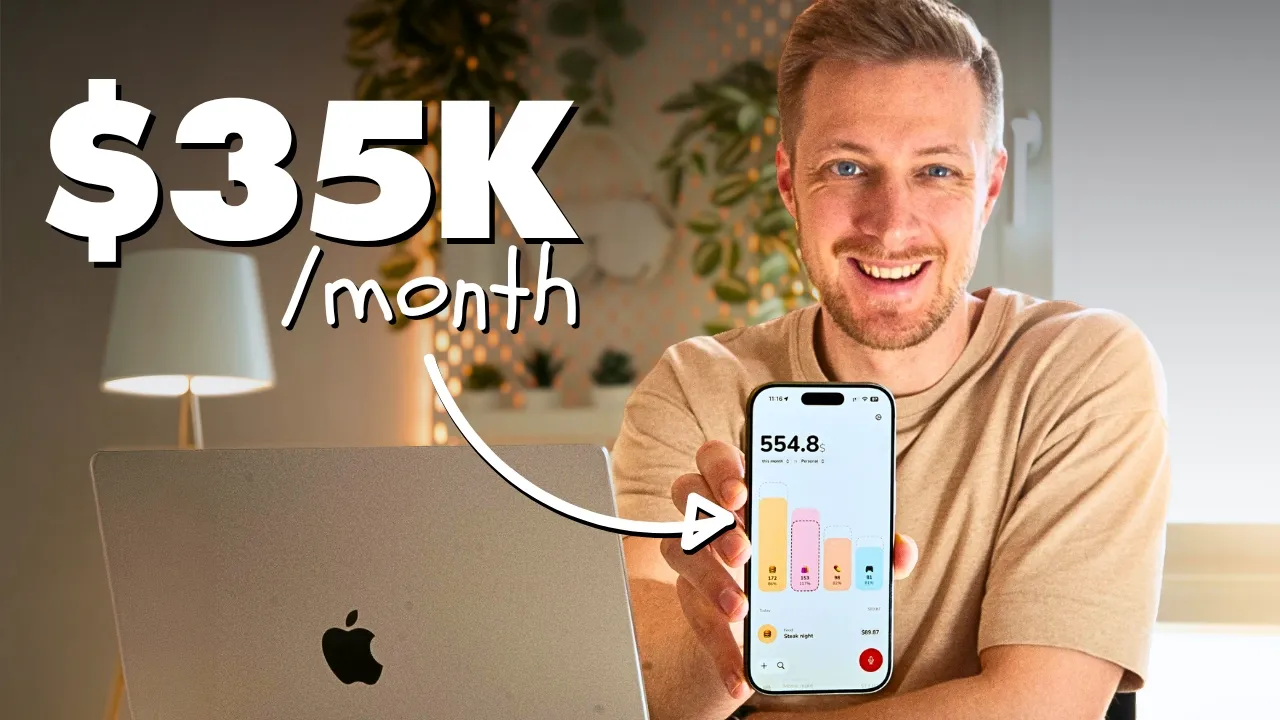
- Built Monai, a minimal expense tracking app, and grew it to more than $35,000 in monthly recurring revenue.
- Started in Germany and originally wanted to study in a creative field.
- Studied computer science and taught himself to code iOS apps.
- Worked as a mobile UX lead before going full-time on his own apps.
- Built side projects next to his job, but none succeeded before Monai.
- Quit his job earlier in the year after Monai grew enough to support him full-time.
-
Monai
- Helps people track expenses with less friction than traditional money tracking apps.
- Uses AI so users can enter expenses by voice or through automations.
- Positions itself as minimalistic instead of bloated.
- Lets users manually add expenses or say entries such as coffee at Starbucks 50 bucks.
- Automatically creates transactions, adds tags, adds categories, and adds entries to the list.
- Uses Apple Pay automation through Shortcuts integrations.
- Includes budgets and AI reports that answer questions about the user’s finances.
-
Metrics And Pricing
- Grew from about $300 MRR after one and a half years to more than $35,000 MRR after partnering with a creator.
- 10xed MRR within a week of the first creator video.
- Reached almost $8,000 MRR within a month of the first video.
- Grew by more than 10,000% from the beginning of the partnership to the time of the interview.
- Uses a subscription model with a 7-day trial.
- Tested premium and paywall approaches and found a hard paywall with free trial worked best.
-
Origin And Build Process
- Built the app for himself because he wanted to track expenses again.
- Had quit other expense tracking apps because they were too cumbersome.
- Combined expense tracking with AI once AI became usable enough for the job.
- Wanted to ship quickly after previously spending 2 years on an app that nobody cared about.
- Built the first version in about one or two months, then kept iterating.
-
Influencer Partnership
- Partnered with a large content creator from Colombia who discovered Flo through social links in the app.
- Started the partnership after negotiating terms with the creator.
- Has the creator post three videos per month on his main channel.
- Uses a contract with a fixed monthly retainer and a percentage of profits.
- Previously used a percentage of revenue, but found it did not scale well.
- Prefers profit-based incentives because the creator is rewarded for doing what is best for the app.
- Focuses on quality over quantity with three high-quality, story-driven videos per month.
- Lets the creator own video ideas because he is the creative mind behind the content.
-
Content Performance
- Saw the first simple app walkthrough and another video grow MRR from $300 to around $7,800 to $8,000.
- Saw another short video add more than $5,000 MRR and bring the app to about $13,000 MRR.
- Went through a lower season before a June 21 video connected to being invited by Apple to join WWDC.
- Saw that WWDC story video reach 1.7 million views and add almost $5,000 MRR.
- Grew past $35,000 MRR after a recent feature-focused story video.
-
Influencer Marketing Playbook
- Find aligned partners whose lifestyle, tone, audience, personality, and charisma match the product.
- Look for creators who connect with viewers and reply to comments because app buyers often have questions.
- Warm up the relationship by following and commenting before outreach when possible.
- Be specific in outreach by referencing an exact video, moment, or joke.
- Connect the creator’s audience and values directly to the product.
- Signal willingness to pay early so the creator sees a real incentive.
- Show examples of similar products in the niche that already make meaningful money.
- Keep outreach brief because creators receive many emails.
- Send a personalized video when possible to stand out.
- Add social handles inside the app so creators can discover and contact the founder.
- Consider markets outside the United States.
-
Tech Stack And Costs
- Builds apps natively with Xcode, which is free.
- Uses Claude Code extensively on the max plan for $100 per month.
- Uses RevenueCat for revenue stats and A/B testing, costing around $400 per month.
- Uses Appwrite for backend, authentication, and database at about $25 per month.
- Uses OpenAI for easier AI tasks and Anthropic for deeper analysis, costing around $200 per month.
- Uses Helm to simplify App Store Connect work and bought a lifetime plan for about $175.
- Uses Figma on the free plan for design.
-
Lessons And Advice
- Wishes he had started Meta ads earlier because the creator’s strong videos became useful ad creative.
- Saw good early results from Meta ads after only a few weeks.
- Believes strong content can later be used to scale paid ads.