-
Max
- Is a father of two, a husband, and an iOS engineer in his day job.
- Started his software engineering career as an iOS developer about eight years ago.
- Spent years trying to grow a mobile pet project without success.
- Changed his approach after watching an Adam Lyttle video on YouTube.
- Moved from focusing on one perfect project to shipping many simple apps quickly.
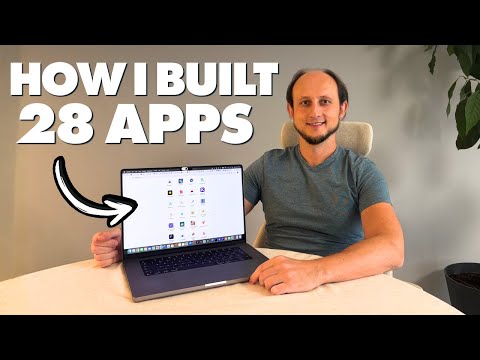
- Built 28 simple mobile apps during off-work hours in eight months.
-
Portfolio Metrics
- Makes about $10,000 per month across 28 apps.
- Has over 1,000 subscribers across all apps.
- Has about 4,000 to 5,000 daily users across the portfolio.
- Gets the biggest revenue share from four apps.
- Each of the top four apps brings in around $1,500.
- The rest generate smaller amounts.
- Went from about $200 per month to $10,000 per month in eight months.
- Built his fastest app in about two hours from idea to App Store review submission.
-
Idea Research Process
- Starts by finding strong App Store keywords.
- Uses Astro as the main ASO tool for idea discovery.
- Picks a category or a product he wants to build and searches for relevant keywords.
- Looks for related keywords that target the same users with slightly different problems.
- Uses study apps as an example, with keywords like physics AI, chemistry AI, and math AI.
- Requires keywords to have at least 20% popularity.
- Looks for difficulty around 60% to 70%.
- Checks top competitors and their monthly revenue with Sensor Tower or similar tools.
- Uses at least $100 or 200 euros per month in competitor revenue as a benchmark.
- Avoids markets where competitors do not show enough revenue.
-
Build Process
- Studies two or three competitors before building.
- Focuses only on the main feature tied to the target keyword.
- Asks ChatGPT or Gemini for a detailed implementation plan for the chosen keyword.
- Provides UI and UX constraints to the AI plan.
- Reuses existing project components.
- Drags and drops custom buttons, views, and screens.
- Reuses settings screens, onboarding, and paywalls instead of rebuilding them.
- Copies up to about 90% of the code for some apps.
- Creates screenshots and app icons in Figma using templates from older projects.
- Uses ChatGPT to generate app descriptions.
- Fills metadata so it matches the original keyword strategy.
-
Shipping Playbook
- Find strong keywords with a good popularity and difficulty ratio.
- Confirm that top apps in the market make real revenue.
- Study competitors and define one core feature.
- Use AI to generate a development roadmap, feature breakdown, and UX structure.
- Build a lean MVP with only the features needed to deliver value.
- Release the app and move to the next build.
- Let data decide which apps sink and which float.
- Watch whether the initial App Store boost fades, stabilizes, or grows.
- Treat apps that do not sink as having potential.
- Return to winners and scale them.
- Polish apps with organic traction or retention.
- Fix bugs and improve them.
- Add ads to double down on results.
-
Tech Stack and Costs
- Uses Flutter for app development.
- Uses Fastlane to ship quickly.
- Uses Cursor for AI coding.
- Uses Firebase for backend, authentication, database, and website hosting.
- Uses OpenAI and Gemini for image recognition and AI work.
- Uses Mixpanel for analytics.
- Uses Astro for iOS ASO.
- Uses FoxData for iOS and Android.
- Pays about $20 per month for Cursor.
- Uses Fastlane for free.
- Spends about $200 per month on OpenAI.
- Spends about $50 per month on Gemini.
- Spends about $5 to $10 per month on Firebase.
- Uses Mixpanel’s free plan.
- Spends about $10 per month on Astro.
- Uses FoxData’s free plan.
-
Lessons and Advice
- Do not be afraid of shipping.
- Avoid spending too much time polishing.
- Avoid adding another killer feature before launch.
- Make the app bug-free with one clear feature.
- Ship it and let users respond while you build the next app.
- Reuse components and build the shipping muscle through repetition.