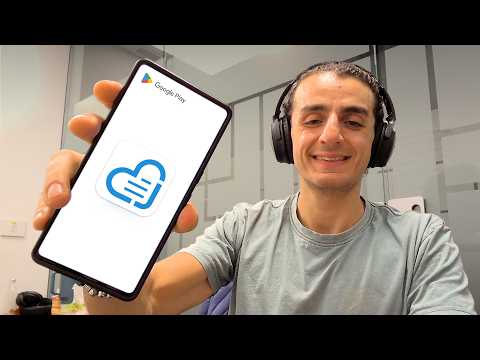
I Built a $100K/Month Android App
Summary
- Steve
- Built Journalable, a mobile app that grew from less than $1K in revenue to more than $100K per month over the past year.
- Built the app with a co-founder after both had gone through their own weight-loss journeys.
- Lost 45 kilos, or about 100 pounds, by tracking calories closely.
- Entered the calorie-tracking space after using many competing apps and seeing that they were too complex.
- Journalable
- Is an AI calorie counter and all-in-one AI nutrition assistant.
- Tracks calories, macros, weight loss, exercise, streaks, and weekly tracking.
- Lets users type meals, type exercise, or upload food photos.
- Uses AI to identify ingredients, estimate portion sizes, calculate calories and macros, and summarize meal totals.
- Focuses on simplicity and a quick, low-friction experience rather than adding many features.
- Metrics
- Made $125K in the previous 28 days in RevenueCat.
- Has around $80K MRR, just under $1M ARR, more than 30,000 active subscribers, and about 40,000 total subscribers.
- Has almost 1M downloads on Android.
- Gets about 80% of users and revenue from Android and 20% from iOS.
- Has spent just under $500K on Google Ads and generated nearly the same amount in directly attributed revenue.
- Android strategy
- Focused on Android because the company was bootstrapped and capital constrained.
- Saw that iOS advertising costs were almost four times as high as Android while iOS conversion was only about 20% better.
- Tested both platforms and found Android more cost-effective.
- Saw Android campaigns perform as well as iOS campaigns while also creating some iOS spillover.
- Doubled down on Android after Product Hunt produced a few hundred installs and two paying subscribers.
- Google Ads growth system
- Runs Android-focused Google app campaigns across Google’s digital real estate.
- Shows ads in display placements, Google Search, YouTube, Discover, and especially the Play Store.
- Treats Google Play ads as the main performer, especially for keywords like calorie counter and calorie tracker.
- Relies on data, conversion rates, and campaign economics rather than conventional advice.
- Paid ads playbook
- Set up attribution and measurement so app events and purchase values flow back into Google Ads.
- Launch install campaigns first so Google’s algorithm learns install costs, CPMs, and baseline performance.
- Provide five headlines, five descriptions, and as many image and video assets as possible, using stock assets if needed for a quick proof of concept.
- Let campaigns run long enough to learn, then improve assets with big creative swings instead of tiny visual tweaks.
- Improve Play Store assets because Google App Campaigns use the app title, subtitle, description, and screenshots.
- Move to target CPA campaigns once assets are strong and purchase or trial data is available.
- Budget around 10 times the target event cost per day so Google can optimize against enough events.
- Scale budgets while improving product conversion, paywalls, business model, and pricing.
- Android opportunity
- Notes that AI has lowered the barrier to publishing apps and increased saturation, especially on iOS.
- Sees opportunity in Android versions of successful iOS apps that do not have strong Android equivalents.
- Sees another opportunity in niche problems that were previously too small to justify development.
- Recommends finding small unresolved problems in apps people already use, solving them, and finding others with the same pain.
- Tech stack and tools
- Uses Firebase, GA4, BigQuery, GCP, Google Play, and Google Ads.
- Uses RevenueCat for subscription management and OpenAI for back-end AI usage.
- Uses Claude Code, OpenAI premium, GitHub Copilot, CodeRabbit, Fixer, n8n, Appfigures, and Webflow.
- Advice
- Start creating content and documenting the journey earlier.
- Build skill in social media and content creation because it can become an important business asset.