-
Loick
- Built three successful SaaS companies in the e-commerce industry using the same playbook.
- Launched more than 10 SaaS companies, with most failing except three that worked.
- Reached at least $35,000 MRR within the first month of activity for each successful SaaS.
- Bootstrapped all of the successful companies.
- Spent the first 5 years of his professional life building a SaaS that no one used.
- Made many bad decisions during that period and ended up with zero customers and zero MRR.
- Changed direction after an e-commerce owner came to him with a problem that other people also had.
- Moved from a builder mindset to a problem-solver mindset.
- Left his CEO position at MineA to focus entirely on scaling Drop Magic.
-
Products
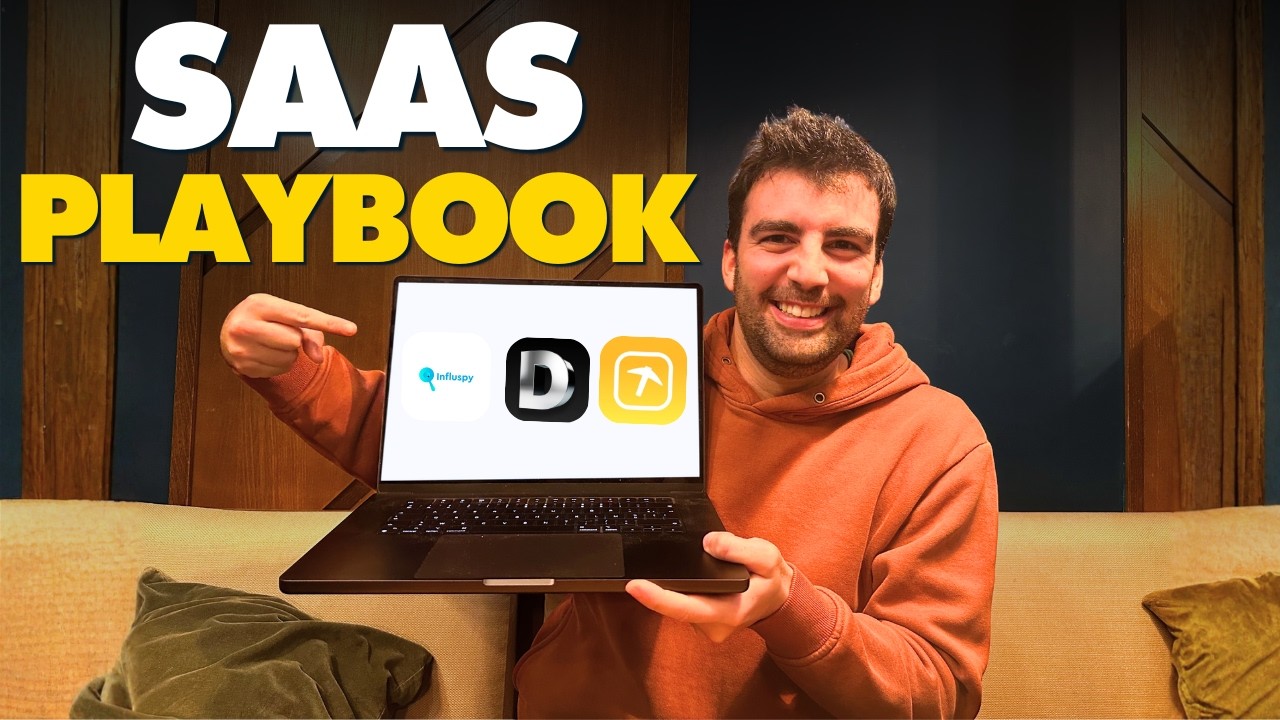
- Built Infuspy to help e-commerce businesses find the best influencers on Instagram and Snapchat to promote products.
- Grew Infuspy to $20,000 MRR in 2 months, though it is no longer operating.
- Built MineA to help dropshippers and e-commerce businesses find products and detect market opportunities.
- Grew MineA to a peak of $750,000 MRR within 2 years.
- Built Drop Magic to help beginners create online stores with AI.
- Grew Drop Magic to more than $45,000 MRR within the first 4 months.
-
Validation Playbook
- Started with a newsletter to validate initial traction.
- Built a no-code app to validate product-market fit.
- Built a real app only after validating enough demand to scale.
- Chose the simplest path with as little risk as possible.
-
Creator-Led Growth Strategy
- Believes many entrepreneurs focus too much on product and not enough on distribution.
- Works with YouTube creators as promoters or co-founders.
- Pays promoters with cash or affiliate revenue.
- Pays creator co-founders with equity.
- Worked with more than 500 YouTube creators for MineA and Drop Magic.
- Focuses on YouTube because it produces more predictable outcomes than viral short-form content.
- Values long-form YouTube because creators have time to show how they use the app.
- Benefits from YouTube videos continuing to convert years after publication.
- Repurposes long-form YouTube content into short-form clips and ads.
- Says more than 60% of new customers come from YouTube.
-
Creator Selection And Deal Process
- Finds creators by searching YouTube keywords, studying videos, and reviewing competitor creator partnerships.
- Looks for an engagement rate above 10%, measured as views divided by followers.
- Looks for at least 100 comments per video.
- Checks whether a creator has worked with a brand at least three times, because repeat deals suggest profitability.
- Uses a seven-email outreach campaign with different marketing angles.
- Also contacts creators on Instagram and Twitter.
- Typically structures deals with a fixed fee plus commission.
- Lowers the initial offer by 30%.
- Offers two packages with different risk profiles:
- Higher upfront cost with lower commission.
- Lower upfront cost with higher commission.
- Starts with one test video and checks whether the audience responds and the campaign breaks even after a month.
- Moves into a package of three or four videos when the first test works.
-
Creator Co-Founder Strategy
- Uses creator co-founders to reduce distribution risk during the early stage.
- Knew that Batistan, Drop Magic’s co-founder, could help secure $10,000 MRR through his audience.
- Uses early creator distribution to create enough revenue to expand into other creators and ads.
- Values creator co-founders as power users who provide product insights and direction.
- Values creator co-founders because they sell the product, explain features, and relay feedback from their communities.
- Uses creator co-founders to iterate quickly on scripts, funnels, pricing, and marketing angles.
- Replicates what works with other creators after learning the economics and marketing system.
-
Tech Stack And Costs
- Uses Supabase for the database.
- Uses Next.js and Vercel for front end and hosting.
- Uses Sentry for debugging.
- Uses Trigger.dev for large compute jobs.
- Uses Cursor and Claude Code to develop the product.
- Uses Nanobanana to generate images with AI.
- Uses Gemini and OpenAI for copywriting.
- Uses Blime to detect the best creators and opportunities.
- Uses creator tracking and payment tools.
- Uses a CRM and Loops for email marketing.
- Pays about $100 per month for server and compute.
- Pays about $1,500 per month for AI because Drop Magic offers five AI images to every free user.
- Says MineA had about 80% margins at its sweet spot.
- Expects Drop Magic’s sweet spot to be around 70% to 80% margins after its testing phase.
-
Lessons And Advice
- Advises founders not to get emotionally attached to a project.
- Uses simple deadlines and milestones as the source of truth for whether to continue.
- Says emotional attachment to a logo, project, or team wasted years of his time.
- Believes founders need to drop their ego and pivot when necessary.