Scaled two separate products to more than $3M in annual recurring revenue.
Built Super Demo after repeatedly struggling to demonstrate product value with recordings and outdated demos.
Started building businesses as a teenager, including buying and selling electronics, an organic soy candle business, a clothing company, a digital agency, and a venture-funded B2B seafood marketplace.
Super Demo
Helps companies create AI-powered interactive product demos in minutes instead of hours.
Creates guided, clickable, realistic product experiences that can be embedded on websites or in documentation.
Lets prospects experience a product’s aha moment without signing up or talking to sales.
Uses a Chrome extension to record workflows, clone the front end, and turn steps into an editable demo.
Supports chapters, HTML editing, reusable demo templates, voiceovers, cloned voice, and camera recording.
Metrics
Launched around two and a half years before the episode.
Grew from zero to more than 150,000 users.
Reached slightly over $3M ARR and just over $250K MRR.
Was named G2’s number five fastest-growing product in 2025.
Validation
Started from a problem Joseph had personally experienced while building businesses.
Talked to more than 100 B2B SaaS founders to confirm that product demos were painful.
Learned that people disliked creating product demos, disliked hearing their own voice, and needed better ways to keep demos current.
Built a small experiment to test whether people would pay.
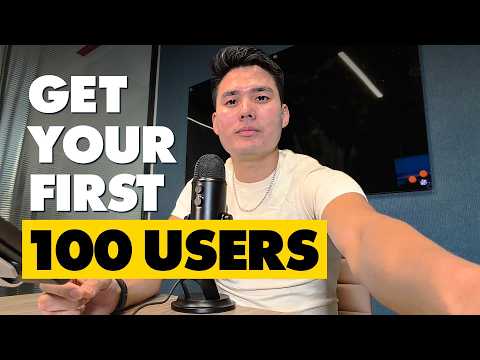
First 100 customers playbook
Capture obvious demand first by targeting people already searching for a solution.
Create SEO content across the top, middle, and bottom of the funnel.
Build detailed competitor comparison pages to piggyback on competitor search demand and earn early search and LLM mentions.
Create ungated free tools in adjacent spaces, such as screenshots and SOPs, so visitors can get value before signing up.
Use programmatic pages with embedded demos for workflow keywords such as exporting Figma to PDF or merging cells in Excel.
Early acquisition tactics
Offered to create free Super Demo examples for founders on Reddit and Indie Hackers.
Asked founders to share product URLs, created demos for them, then replied publicly with the finished interactive demo.
Used the public replies to attract other founders who saw the demos and either requested one or signed up themselves.
Built distribution density through SEO, LLM visibility, communities, direct outreach, product updates, LinkedIn, Indie Hackers, and building in public.
Traffic sources
Gets roughly 30% to 40% of visitors from SEO and LLMs.
Gets about 30% from word of mouth, watermarks, referrals, and users sharing Super Demos.
Gets about 20% from building in public on LinkedIn.
Gets roughly 20% of all traffic from free tools, which convert about 15% to 20% of visitors into signups.
Tech stack and tools
Uses Super Demo internally for product demos, onboarding, and training.
Uses Claude Code, Cursor, and Codex heavily depending on the model or task.
Uses Linear for task management and integrations with Slack and Claude.
Uses AWS, Postmark, Intercom, Ahrefs, Clay, and Zapier.
Advice
Launch sooner and avoid chasing perfection.
Use urgency and speed as the founder’s advantage over incumbents.
Stop obsessing over competition and start building when the problem is right.