-
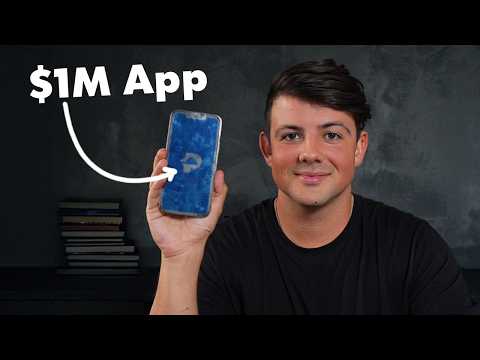
Steven Cravotta
- Builds viral mobile apps and has reached over 12 million total downloads across his apps.
- Built Puff Count, a mobile app doing about $40,000 in monthly recurring revenue.
- Had no coding experience and does not design or develop the apps himself.
- Focuses on ideas, team building, marketing, and iteration.
-
Puff Count
- Helps people quit vaping.
- Generated $43,000 in sales over the last 30 days shown in the episode.
- Generated just over $112,000 in sales over the last 90 days shown in the episode.
- Took about four years to become meaningful revenue, with most of the revenue coming in the last six or seven months.
-
Why Mobile Apps
- Offer unlimited scale because the product can be built once and sold many times.
- Are easier to start than many people think because of no-code tools, templates, and freelance developers.
- Remain relatively untapped because many founders assume apps are too hard to build.
- Reward founders who can solve a real problem and market the solution well.
-
Idea And Validation
- Starts with problems Steven experiences in day-to-day life.
- Treats himself as the ideal user when he is solving his own problem.
- Looks for products that create a transformation, such as weight loss, dieting, quitting vaping, or quitting drinking.
- Validated Puff Count through market research.
- Studied quit drinking and quit smoking apps in Sensor Tower.
- Checked Google Trends and saw vaping was rising.
- Looked on TikTok and saw vape videos going viral.
- Believes founders often give up too quickly before marketing has been figured out.
-
Product Development Process
- Brain dumps all app ideas, features, and competitors into Google Docs.
- Sketches the app on paper with pencil.
- Studies competitors’ features, onboarding, and UI to understand what a good app looks like.
- Uses 99designs to turn sketches into professional UI concepts.
- Uses Upwork to hire developers and turn the design into an app.
- Prefers Eastern European developers for quality code at lower cost.
- Pays developers per completed project after the app is live and bug-free.
- Says a straightforward MVP can be built for less than $5,000, and some apps can be built for less than $1,000 with templates.
-
Marketing
- Says marketing is about 95% of the success of a mobile app.
- Uses organic TikTok as the main marketing channel.
- Studies viral TikTok videos in the niche and saves them in a spreadsheet.
- Looks at hooks, value, and filming style to understand why content works.
- Makes content entertainment-first and adds only a short call to action at the end.
- Uses organic performance as a signal for paid ad creative.
- Runs winning creatives on paid channels such as Facebook ads and TikTok ads.
- Tests influencer content but finds it difficult because many influencers want high upfront payments.
-
Monetization
- Used ads in earlier game apps because users spent more time inside those apps.
- Uses in-app purchases for tool-focused apps like Puff Count because users are not expected to stay inside the app for long sessions.
- Uses a free app with onboarding followed by a hard paywall.
- Saw the business change overnight after switching Puff Count to a hard paywall with a free trial.
- Reached conversion rates around 20% to 25% after the hard paywall change.
- A/B tests pricing from $4 to $12 and optimizes for the highest lifetime value.
-
Onboarding And Analytics
- Uses onboarding to make users think through the problem the app solves.
- Asks many questions before the paywall, even though some users may find it annoying.
- Uses Superwall to remotely configure and A/B test paywalls.
- Uses RevenueCat for analytics and lifetime value data.
- Uses AppsFlyer as the mobile measurement partner connecting the app to ad platforms.
- Uses Mixpanel and Amplitude for deeper product analytics while staying on free plans when possible.
-
Advice For App Builders
- Focuses on health-related apps because helping people improve themselves can be lucrative.
- Encourages founders to outsource skills they lack and build a trusted team.
- Recommends launching a simple MVP, talking to users, gathering data, and iterating.
- Warns founders not to spend months on unvalidated features before releasing.
- Believes projects can take months or years to work, so founders need commitment and willingness to learn.
-
Life And Work
- Was traveling as a nomad in Europe during the episode.
- Starts work later in the day, around 1 p.m., after coffee, gym, and personal time.
- Works into the evening and sometimes later depending on what needs to get done.
- Uses travel to create space for inspiration and focused building.