-
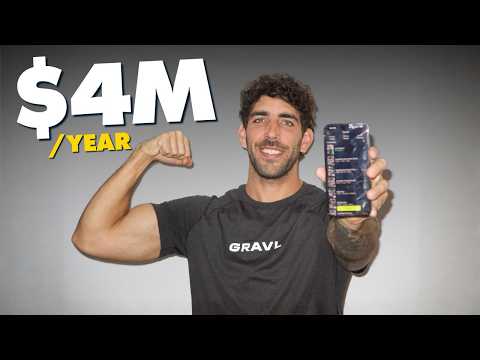
Julian Gargicevich
- Is a developer from Argentina and one of the co-founders of Gravel.
- Grew up around fitness because his dad owned a fitness center.
- Spent much of his time outside school playing sports and going to the gym.
- Studied software engineering and moved to Australia.
- Worked at small startups, big tech companies such as Atlassian, TV channels, and an investment fund.
-
Gravel
- Is an AI fitness app that provides smart workouts for the gym.
- Launched around two years before the episode.
- Has over 70,000 subscribers.
- Made over $440,000 in the prior month.
- Focuses on strength training and gym workouts.
-
Origin Story
- Julian and his partners first worked on an influencer marketing platform for mobile games.
- The business gradually became more like a marketing agency, which was not what they wanted to build.
- The agency taught them about user acquisition, marketing, and app revenue numbers.
- Julian started with a workout tracker idea, then realized it did not add enough value compared with existing trackers.
- A friend showed him Fitbod, and Julian liked the UI and concept of workouts generated on the spot.
- After using Fitbod, he felt the workouts were weird and sometimes dangerous.
- Decided to build a product with Fitbod-style UI and UX plus a stronger workout engine.
-
Building The MVP
- Built the initial MVP in around two to three months.
- Started with a tracker-style MVP before shifting toward the Fitbod-inspired concept.
- Found the custom workout engine to be the hardest part.
- Had to account for equipment, weekly goals, gym frequency, consistency, gender, weight, age, and many other combinations.
-
Launch And Validation
- Used Reddit as the first major distribution channel.
- Posted a thread explaining how he built Gravel, which was then called Games AI.
- Shared technical details in the post.
- Got a couple hundred likes within the first few hours and over 300,000 impressions.
- Got the first couple thousand users from Reddit.
- Saw developers using the app because they liked tech and some were interested in the gym but found it intimidating.
- Received bug reports and feature requests that convinced the team they were onto something.
- Added a subscription model after the app had early traction.
-
Growth Strategy
- Used paid ads as the main distribution channel after adding subscriptions.
- Got a subscription within the first 10 minutes of activating the first ad.
- Translated the app into Spanish and started running ads in South America.
- Spent less than $50 a day on ads in the early days.
- Continued relying on paid ads as the channel that worked from the start through the episode.
-
Advice For Consumer App Builders
- Validates before spending money on ads.
- Treats validation as proof that people are willing to pay, not only proof that the product works.
- Looks outside the United States when ads are expensive and competitive.
- Suggests translating into other languages when founders have the ability to do so.
- Starts small with influencers, creators, AI videos, and CapCut-edited creatives.
- Emphasizes creating creative volume because making one ad is not the hard part.
- Says UGC is king for ads.
- Uses public ad libraries to study competitors and copy what is already working.
-
Product Experience
- Starts users with onboarding questions about name, goals, experience level, training frequency, workout split, excluded muscles, focus muscles, and where they train.
- Shows users that the app is generating a custom workout plan.
- Uses a hard paywall before users sign in for the first time.
- Centers the main app experience around the workout card and active workout flow.
- Includes exercise lists, videos, descriptions, and instructions.
- Adjusts weights based on exercise order.
- Tracks muscle recovery based on previous workouts and external activity from sources such as Apple Health and Strava.
- Offers 24/7 in-app support with articles, messages, and a real person replying instead of AI.
-
Tech Stack And Costs
- Uses React Native and Expo for the app.
- Uses .NET for most core backend functionality.
- Uses Next.js and React for internal admin dashboards.
- Uses Cursor while being specific about which files AI should touch.
- Spends about one third of revenue on ads across Meta, TikTok, Google, and Apple Search.
- Grew from three founders to a team of about 13 to 14 people, including part-time people and contractors.
- Spends around $50,000 to $80,000 on salaries.
- Pays Apple’s 15% revenue cut.
- Pays about 1% of revenue to RevenueCat.
- Pays about $1,000 a month for mobile measurement partners.
- Pays about $1,000 a month for servers, AI bills, and other app infrastructure tools.
-
Lessons And Advice
- Encourages founders to be proud of what they build.
- Says it is easier to work for zero dollars when the founder loves what they are doing.
- Warns that building is not even half the work because founders still need distribution, ads, feedback, and persistence.
- Says founders should keep going through failed ads and setbacks.
- Also says founders need to know when to quit a product that is not working.
- Believes his previous startup probably lasted an extra year longer than it should have.