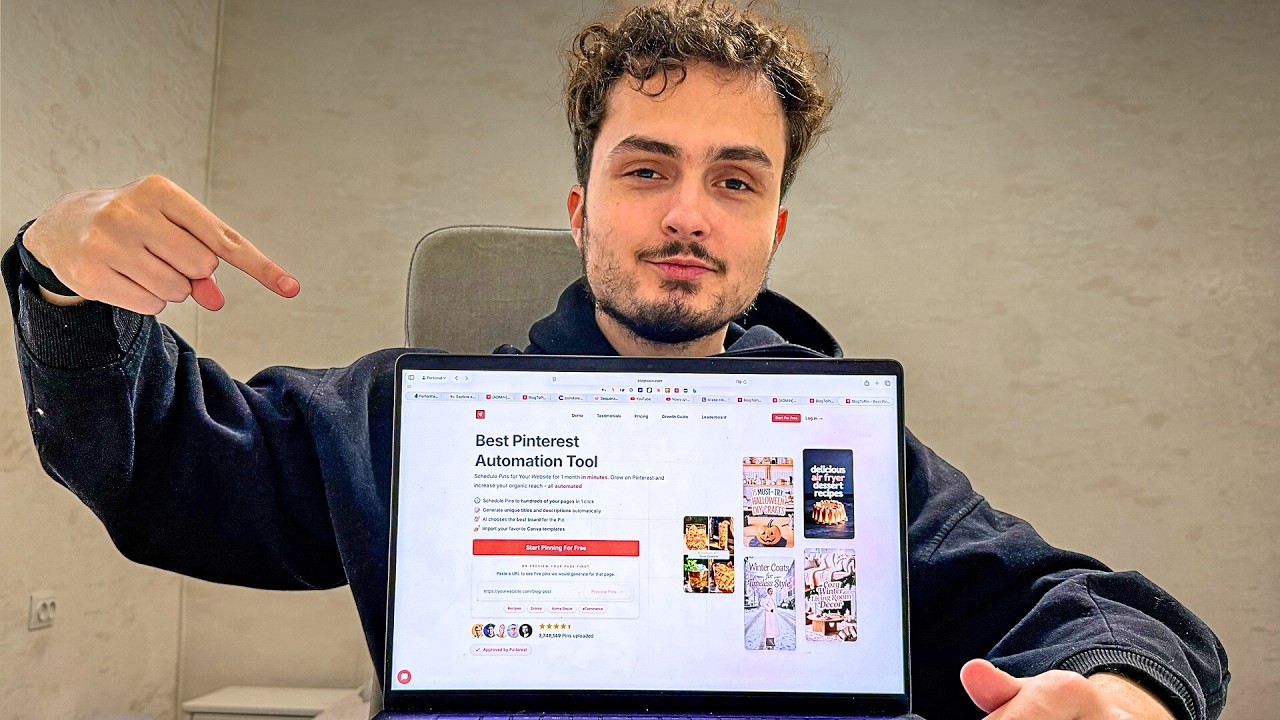
I Make $16K/Month... Even In A "Tiny" Niche
Summary
- Nick
- Built Blog to Pin, a Pinterest marketing tool, to scratch his own itch.
- Grew it to over $16,000 MRR over two years.
- Learned software engineering at 15 and got his first software engineering job after graduating from school.
- Reconsidered the corporate path after the war started in Ukraine and he went through a long depression.
- Found indie hackers and AI tools, tried several apps that made zero revenue, then found the Pinterest problem while growing an AI cocktail blog.
- Block To Pin
- Automates Pinterest pin creation for websites.
- Scans a website, understands what it is about, and creates Pinterest pins from the site’s content and images.
- Lets users schedule pins for weeks or months in a few minutes.
- Generates SEO-optimized, varied pins and lets users review analytics for what works.
- Saves users from manually designing five to 10 pins per day, each of which could take five to 10 minutes.
- Metrics And Business Model
- Reached more than $16,000 MRR.
- Has more than 400 active subscribers.
- Has churn around 10%.
- Charges about $39 per month on the starter plan, with agency and enterprise plans for scaling users.
- Still has some recurring revenue in Lemon Squeezy from an earlier payment provider setup.
- Building The Product
- Got the idea in December 2023 while still working a 9-to-5.
- Built on nights and weekends with GitHub Copilot.
- Had a scrappy version in seven days, then rewrote much of it to make a real product.
- Launched with a lifetime deal because he did not expect anyone to buy.
- Waited 10 days for the first paying customers, then switched to subscriptions and improved the product.
- Growth Channels
- Relies most on word of mouth, affiliates, SEO, and recommendations from ChatGPT and other LLMs.
- Reviews user screen recordings and account behavior when customers do not see Pinterest growth.
- Builds requested features in hours or days when they matter to customers.
- Created articles, reached out to influencers, posted on Reddit, and built backlinks early.
- Looks for asymmetric marketing where early grinding turns into later autopilot customer acquisition.
- Micro-SaaS Playbook
- Find something people already do and already pay for.
- Research existing products through Google, G2, AppSumo, Capterra, and YouTube reviews.
- Identify competitor weaknesses and places where AI can remove complexity.
- Build an MVP that is faster, cheaper, and better for one specific person.
- Create the MVP with Claude Code in one or two weeks.
- Talk to the ICP through Reddit, X, cold outreach, YouTube, TikTok, Reels, and Facebook groups.
- Treat the first customer like an employer and make that person fully satisfied.
- Improve the product by 1% every day across churn, onboarding, emails, and features.
- Tech Stack
- Uses Vercel for the web app.
- Uses Hetzner for scrapers.
- Uses Oxylabs for proxies.
- Uses Gemini for AI text and Fal.ai for AI images.
- Uses sequencing for emails and churn prevention.
- Lessons And Advice
- Try different things until a niche and pain point becomes clear.
- Pick one niche, solve one specific pain, and stick with it for at least a few months.
- Do not hide behind directories or Product Hunt launches; find a real human who benefits from the product.