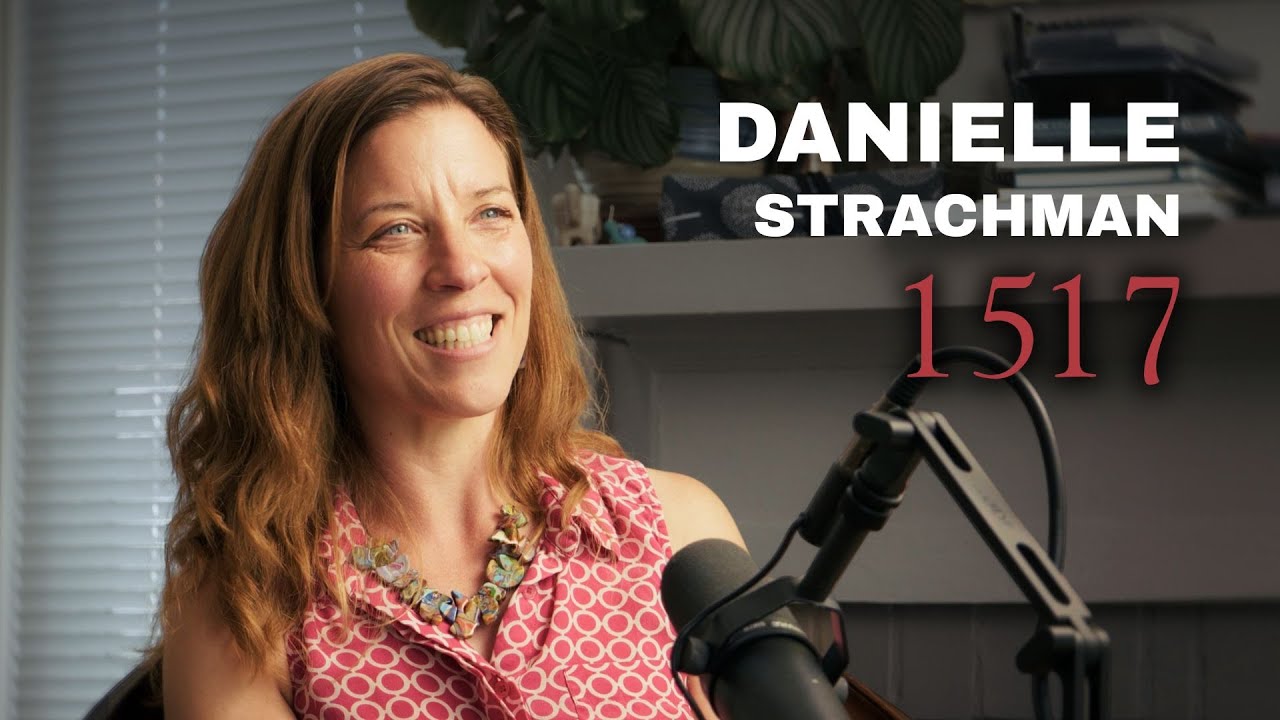
Danielle Strachman, co-founder and general partner at 1517 Fund, describes how the firm backs very young builders through small “belief capital” grants, larger venture checks, and a long-term community that treats founders as captains of their own ships while 1517 acts as navigator.
The Medici Project: small grants as belief capital
The Medici Project began as unnamed “nudge grants” of $1,000 given to teens at Thiel Foundation summits who simply wanted to talk about an idea, not pitch a company.
The insight: young people usually get money only as a prize for something already built; giving resources before a finished product unlocks hidden talent that lacks early access to capital.
Max Lockach received $1,000 for a freight-forwarding idea while still in high school; he later nearly won TechCrunch Disrupt and raised outside funding.
Noah Shuddy (DeepGram, now Series C) was met in a Michigan frat house during a hackathon weekend; he described an algorithm idea in a room with leftover party pants and a belt, and 1517 granted him $1,000 on the spot.
Ethan (Mach Industries) got a high-school grant to work on a novel rifle; that project evolved into Mach Industries, where 1517 wrote the first check.
A 16-year-old making hyper-realistic stuffed-animal heads received a grant after a call where she admitted, “I don’t know how to do this”; Strachman recognized her engineering mindset applied to craft and is now connecting her to bioprinting experts.
The grant is deliberately for projects, not companies; some become companies, many stay projects, and both outcomes are celebrated.
Strachman emphasizes the psychological power of an early “yes”: after a string of rejections, a single believer can shift a young person from “am I crazy?” to “someone else thinks I’m right.”
Finding high-potential young people earlier
1517’s network operates like tendrils: grantees, founders, and community members spot outliers and refer them (e.g., an 11-year-old ship-design enthusiast in Toronto was introduced by a grantee; 1517 arranged a field trip with a portfolio ship-design company).
Strachman, a former educator who founded a Montessori-inspired charter school, personally mentors younger children and runs a camp (2E) for ages 14–18.
She advocates Montessori/unschooling principles: treat children with reverence, preserve their innate agency, prepare environments where resources are at their level, and avoid one-size-fits-all systems.
Her godchildren illustrate the point: each thrives in a different structure (traditional, nature-based, future homeschooling), reinforcing that optimal childhoods are highly individual.
The role of an early believer
A great early believer helps the founder map their own path, connects them to relevant people, and uses Socratic dialogue rather than directive advice (“I’m older, do it my way”).
Strachman explicitly labels which “hat” she’s wearing (investor, educator, personal) so founders can weigh input accordingly.
The mantra: “You’re the captain of your ship; we’re the navigator looking ahead.”
Sometimes the navigator sees rocks the captain doesn’t: Strachman recalled aggressively warning a founder against a premature crowdfunding campaign because a previous founder ignored the same warning, smashed into the rocks, and is still delivering years late.
Founder-to-founder troubleshooting calls (Friday “coffee and troubleshooting”) let peers warn each other in a more trusted voice than investors.
How 1517 works with founders
Engagement starts with an onboarding call that delivers two messages: (1) “We believe you could be a fund-returner” (1517 targets 4× per fund; Fund I returned 4.5×), and (2) “The most likely outcome of any single investment is zero, so swing for the fences—we’d rather you flame out early and move on than peter out.”
Ongoing interaction is proactive Socratic review: “What do the next three months look like? Where are the rocks? What conversations are you delaying?”
Expertise leans toward leadership development; technical questions are referred to specialist founders in the network.
Capital deployment follows a scaffolded ladder: $1,000 Medici grant → $100K R&D check (e.g., Human at Soulcoa, rare-earth extraction, started at 15 in parents’ basement) → pre-seed/seed millions → follow-on reserves and SPVs for highest-conviction companies (Luminar, Lambda Labs).
“ATM machine, password is traction”: when a portfolio company shows real progress, 1517 moves fast and rings the dinner bell for LPs via SPVs.
The question Strachman asks most
“Would I have wanted to meet this person in the Thiel Fellowship finalist round?” — looking for irrational, passionate, geeky, mutant-level conviction.
A secondary sorting-hat question: community member → grantee → investee → at what level? 1517 watches progress over years and avoids boxing people as “too early” forever, unlike many later-stage investors who anchor on first impressions.
If she had $10B: build an ecosystem of fellowships
Vision: a massive family office / fund-of-funds backing every niche fellowship program (cash, mentorship, community, arts, science) that operates with genuine care and calling, not as a stepping stone.
Small, high-touch programs (like Paul Graham cooking dinner for early YC batches) retain magic that doesn’t scale; better to fund many such programs than to centralize.
She wants to run experiments: e.g., drive the Bay Area giving $1,000 to non-degreed painters, host a summer showcase, bring tech buyers, and measure medium-term impact on artists’ trajectories.
Prolific creators and the artist/entrepreneur distinction
Prolific output compounds: Picasso made art daily from teens to death; most was forgotten, the few masterpieces defined him.
1517 founders often have a parallel creative practice (painting, music, side art sales) — the medium changes but the generative, playful, curious streak is constant.
Artists create because they must, largely for themselves; entrepreneurs create because they must but must care what others think to find customers. The most interesting people straddle both.
Finding your tribe
For 15 years young builders have said, “I don’t get to meet other people like me.” Fellowships and communities are finally reducing that isolation.
Peer environments where ideas are jammed on without credential-checking (“What college? What major?”) are a critical accelerant.
Hardest thing overcome: founding Innovations Academy in the 2008 crash
At 28, Strachman co-founded a Montessori-inspired charter school (Innovations Academy) in San Diego. A “guaranteed” $250K Walton Foundation grant was denied because the model was non-hierarchical (co-principals), first-name basis, no homework, social-emotional curriculum — all “strange” to the funder.
Lease signed, 130 students enrolled, zero state funding until butts-in-seats. A friend’s mother and a colleague’s brother each lent $75K; the recession hit; it took four years to repay.
Strachman couldn’t look the lender in the eye for years. The experience informs 1517’s ethos: “We make money on extraordinary returns, not by clawing back small amounts from struggling founders.” She recently heard of a founder who took contracting gigs to repay a $250K investor check out of fear — exactly the dynamic 1517 refuses to create.