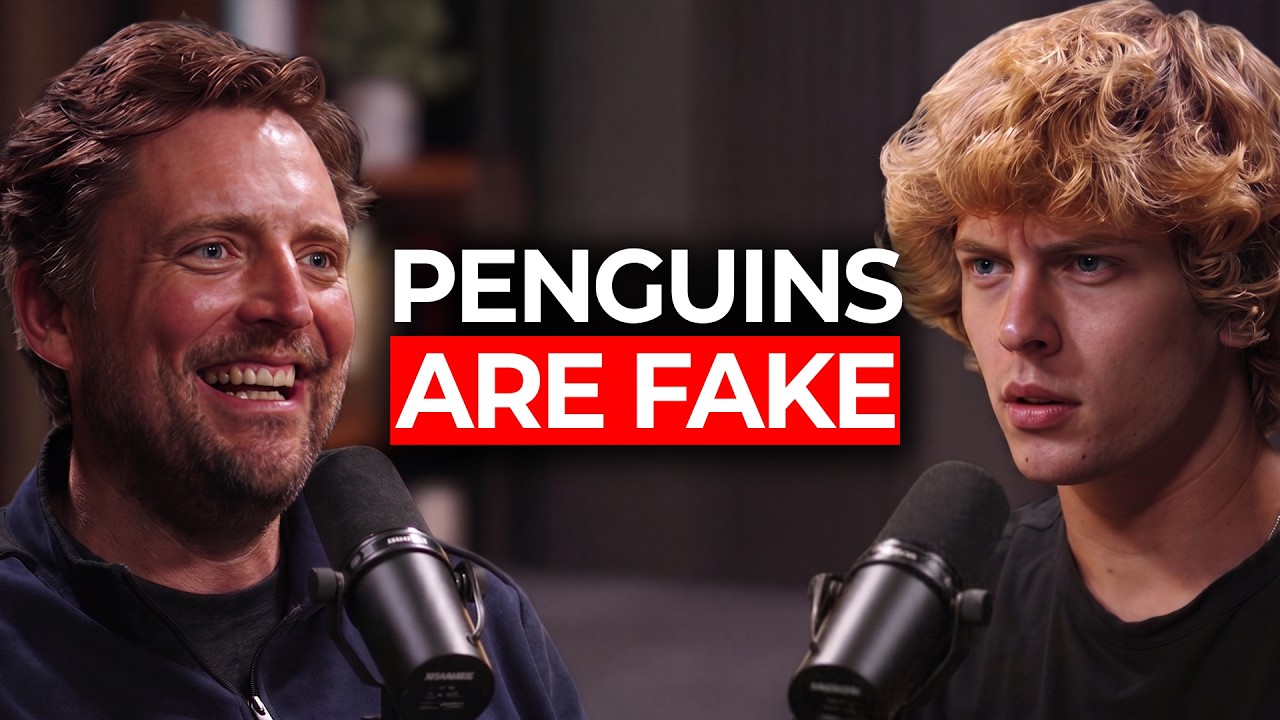
This is a comprehensive transcript of a conversation between Jack Neil and Owen Benjamin. The dialogue is a wide-ranging exploration of philosophy, psychology, spirituality, and social commentary, delivered in Owen’s characteristic comedic and provocative style.
Below is a thematic summary of the key points discussed:
1. Personal Accountability and Psychology
- The Power of Choice: Owen emphasizes that regardless of past trauma (abuse, addiction, etc.), the only way out is through forgiveness and taking full accountability. He argues that “victim consciousness” is a trap and that believing you have control over your life is the only path to freedom.
- Fear as a Tool: He discusses fear as the “ultimate scam,” arguing that social engineering uses the rumor of fear to control people. He believes that once you face a fear directly, it often loses its power.
- Internal Monologue: Owen mentions that he does not have a natural internal monologue, though he can visualize and hear things when prompted. He uses this to discuss the differences in how people process information and the nature of autism (which he views as a passion for detail).
2. Spirituality, Frequency, and Geometry
- The Science of Sound: Owen delves into the concept of resonant frequencies, explaining how everything from the Earth (Schumann resonance) to architecture is tied to frequency. He suggests that “beautiful” things are harmonic and “ugly” things are dissonant.
- Light and Matter: He posits a connection between frequency, light, and geometry, suggesting that the physical world is a manifestation of these harmonics. He references the “conductor of the choir” (Lucifer) and the geometric nature of stars and cathedrals.
- Dreams and Consciousness: The pair discusses the mystery of dreaming, specifically how blind people experience visual elements in dreams and where the “light” of a dream originates.
3. Social Commentary and “The System”
- The “Wizard” and Rhetoric: Owen discusses his book How to Slay a Wizard, using the “wizard” as a metaphor for those who use rhetoric and social engineering to control the masses.
- The Nature of War: He argues that modern war is not “war” but “industrial slaughter,” and advises against participating in any conflict that isn’t a defensive existential war for one’s homeland.
- Money and Wealth: Owen suggests that currency is merely a “point in a game” and that true wealth is found in tangible assets like land and skills. He argues that the financial system is rigged to keep people dependent.
- The “Canceled” Experience: He reflects on his experience with deplatforming and the subsequent targeting of his family by anonymous reports. He describes how this pushed him to build his own independent infrastructure (ladle.tv).
4. Family and Legacy
- The Value of Fatherhood: Owen shares the best advice he ever received from Vince Vaughn: “Make it count.” This encouraged him to start a family, which he claims provided him with a purpose and a motivation to succeed that he didn’t have before.
- Parenting Philosophy: He discusses his approach to raising his children, focusing on encouraging them to be curious and observant (“What do you think it is?”) rather than indoctrinating them with specific theories.
5. Cultural and Philosophical Observations
- Identity and Tribalism: He discusses the nature of “kind” (kin) and the comfort of being around one’s own culture, while maintaining that different cultures are equally valid.
- The “Lizard People” Theory: In a humorous segment, he discusses David Icke’s theories, questioning the practical application of such beliefs (e.g., “What do I do with that?”) while noting that the result—not fearing the future—is the valuable part.
- Art and Truth: He suggests that great art (like the films of Stanley Kubrick) often exposes the nature of reality and power structures, even if the artist didn’t consciously intend to do so.
6. Final Thoughts on Life
- Presence vs. Intellect: Owen warns against the “prison of the intellect,” where one spends so much time in their head that they miss the actual experience of living (e.g., fishing with one’s children).
- The “Field of Dreams”: He uses this metaphor to describe a life of potential and unfolding, where accountability is balanced with the beauty of discovery.