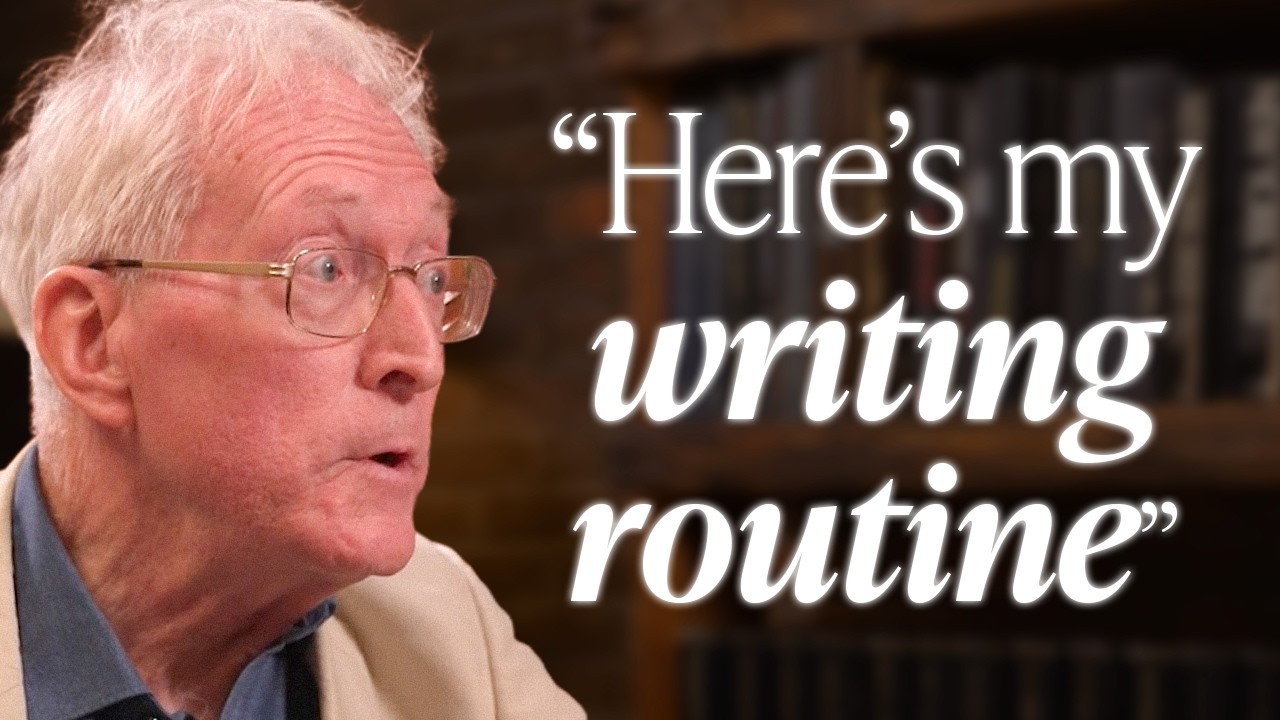
Diarmaid MacCulloch, Oxford professor and historian of Christianity and the Tudor period, explains how historians work: the craft of research, the discipline of writing, and the moral role of history as a defense against lies and a guardian of sanity in society.
The role of historians: guardians of sanity against lies
History defends the human race against madness by guarding truth; societies built on lies — such as demoting Martin Luther King Day or sanitizing museum labels — are both wicked and insane.
MacCulloch traces this conviction to his father, a Church of England rector protected by Parson’s Freehold (tenure), who modeled the freedom to speak truth without fear.
STEM subjects can reach the moon or cure cancer but do not make you a good or sane person; that is the job of the humanities — principally history, philosophy, and literature — which teach you to see yourself as one among many whose interests, especially the weak, need defending.
Core principles: be skeptical, then be sympathetic
Skepticism stops you from being too sympathetic; everyone has agendas, good or bad, and you must ask why a person is telling you something.
Sympathy recognizes that human beings are intrinsically interesting and fallible; history centers on people in the context of events they rarely control.
The balance holds across periods: modern sources offer more perspectives, but even centuries back you look for the echo of that person–structure dynamic.
Writing routine: tidy, bounded, and nap-friendly
Works roughly 8:30 am–7:00 pm with a lunch break and a daily nap; never works evenings.
Morning (8:30 am–lunch) is the prime slot; a second substantial block runs mid‑afternoon to 7:00 pm.
Adopted his doctoral supervisor Sir Geoffrey Elton’s rule: divide the day into thirds, work for two, rest for one — eliminates guilt and sustains quality.
Primary vs. secondary sources: read the old syntheses first
For major biographies (Cranmer, Cromwell), he first read the classic 17th‑century synthesizers — Bishop Burnet, John Strype — to absorb the conventional narrative and its clichés without being dominated by them.
Only then returned to primary sources to test the received story, expecting the conventional account to be partly wrong.
The keys to beautiful historical writing
Purple prose is a negative; good prose shows the writer sympathizing with a subject and illuminating them for the reader.
A sentence that makes you smile two or three times and then think — clever, illuminating — is the mark of quality.
Leaden prose (clichéd, unimaginative) is easy to spot; not all historians need to write beautifully — technical monographs feed the wider conversation — but the Wolfson History Prize rewards work that is both rigorous and accessible.
Famous books that get facts wrong but seduce through prose
Winston Churchill’s Second World War memoirs are beautifully written but distorted by self‑justification; the danger is what they leave out.
The historian’s motto: “Yes, but.” Acknowledge the apparent truth, then add the complicating evidence — less satisfying at first, but truer and a guard against heroic simplification.
Historical facts vs. anecdotal stories: historian and novelist side by side
Primary sources are always partial fragments; the historian must signal degrees of confidence (“we may think it likely…”) where evidence runs out.
Novelists like Hilary Mantel are liberated from “may have” — they fill gaps to serve the story, sometimes getting details wrong (e.g., inventing a romance for Cromwell in Antwerp).
Mantel sent MacCulloch her Wolf Hall typescript to catch mistakes (not fictions); he corrected titles (Prior vs. Abbot of St. Bartholomew’s) while respecting her narrative.
Mantel’s Cromwell felt convincing — especially his devotion to Wolsey and consequent hatred of Anne Boleyn — revealing how shared ideology can coexist with personal loathing.
The two professions inform each other: the novelist enters the character’s mind; the historian anchors the context.
Sense of place: walking the ground changes the story
Place is central; Robert Caro lived in Texas for three years to feel LBJ’s loneliness and poverty.
MacCulloch’s childhood in a 16th‑century Suffolk parish church — tombs of Catholic gentry buried after the Reformation — sparked his Tudor vocation.
Filming documentaries forced him into streets and buildings; the most vivid moment: 45 minutes alone in Moscow’s St. Basil’s Cathedral.
Exterior: chaotic “ice‑cream cornets”; interior plan: perfectly logical, symmetrical octagons — but no one ever saw the plan.
The building’s claustrophobic verticality revealed the mind of Ivan the Awesome; MacCulloch rewrote the script on the spot.
Travel is not replaceable by the internet; the historian’s job is to convey that sensory reality so readers can inhabit a place or mind they cannot visit.
Thucydides, the first great historian, wrote from the experience of defeat — hubris as explanation — a lesson many triumphant narratives ignore.
Personal disappointment and failure are assets: they let you spot excuse‑making and self‑exculpation in historical actors.
Is history written by the victors?
Generally yes, and historians must fight that bias because the victors’ version is not the whole truth.
Bede’s Ecclesiastical History glorifies the Roman mission to the Anglo‑Saxons but downplays pre‑existing Christianity and the role of women.
Archaeology (richly furnished 7th‑century female graves, likely abbesses leading double monasteries) revises Bede without discarding him — his agenda is visible, his work remains precious.
Tell readers your biases up front
No one is neutral; the honest historian declares their standpoint in the introduction so readers can discount accordingly (“he would say that, wouldn’t he?”).
Writing against one’s own convictions when evidence demands it is the test of honesty.
What should historians be? Friend, guide, counselor, entertainer
Friend/guide: walks the reader into a past they couldn’t reach alone.
Non‑directive counselor: helps the reader examine a subject that ultimately reflects back on themselves, avoiding bias and direction.
Entertainer: boredom is a black mark; the Wolfson Prize requires entertainment — irony, constructive humor, occasional bizarreness — because human life is bizarre.
Lunacy and irrationality are underrated forces in history (e.g., the Sinclair Earl’s Rosslyn Chapel; Henry VIII’s late‑life pain and narcissism driving erratic decisions).
Advice for young writers: the “Elizabeth I was a carrot” game
Opens a course with a 20‑question game: “Which statements are historical?”
Factual (Elizabeth came to the throne in 1558) → historical.
False factual (1559) → not historical, but teaches disproof.
Ambiguous (“true daughter of her father”) → metaphor vs. genetics, showing interpretation.
Absurd final question (“Elizabeth I was a carrot”) → students invent a Tudor idiom for redheads; MacCulloch reveals he made it up — teaching that plausibility ≠ evidence.
History is play; if you don’t enjoy it, it’s not worth doing — but getting it right is passionately important because it keeps us sane.