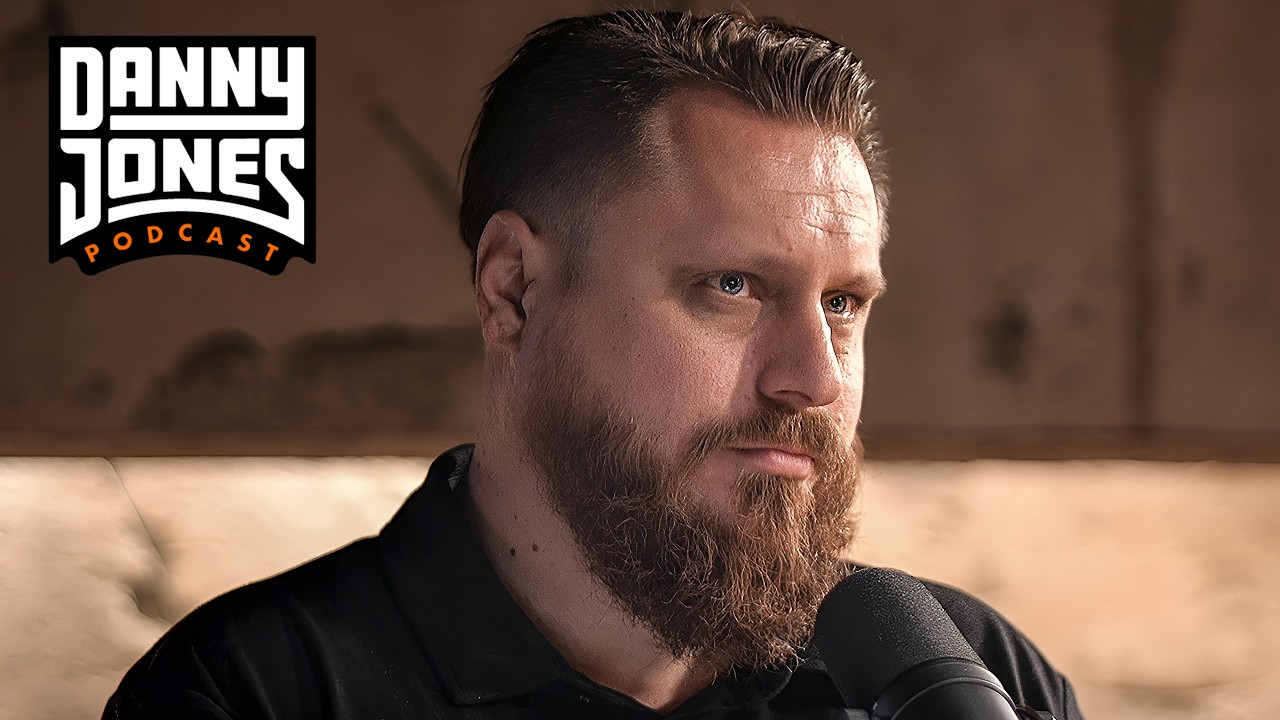
Nathaniel Gillis is a demonologist who conducts in-home investigations, focusing on the pathology of demonic phenomena rather than religious dogma; his interest began at age eight when he encountered a full-bodied apparition of a little girl in his family’s new home, followed by a malevolent black-cloud presence that followed him to sleepovers and projected terror, which he now believes feeds parasitically on fear.
What demons actually are
Gillis rejects the Catholic model of demons as fallen angels, instead drawing on Nephilim lore (Genesis 6) where disembodied spirits of angel-human hybrids persist in a post-biological state.
He highlights a core problem: if demons are purely disembodied, how do they procreate? Incubi literature describes entities that impregnate women and leave secretions and sigils — symbolic signatures akin to branding or chaos magic.
The “Red Rite” concept (from Peter J. Carroll, rooted in James Frazer’s anthropology) suggests a practitioner replicates their consciousness by combining sigils and secretions to possess a fetus, implying a self-replicating mechanism.
An incubus appears to a woman in the image of a man (often a deceased partner); Gillis has cases from the U.S. to India where the entity mimics a husband, then vanishes when the woman realizes her real husband is asleep beside her.
His research centers on “interface events” — moments when human consciousness contacts these beings — seeking pathology over theology.
Why demons smell like sulfur
The sulfur smell may be ozone: the entities affect the local environment, and ancient witnesses described it with the vocabulary available to them.
Gillis and colleague Steve Mera suspect a merger of spiritism and technology (“technomancy”), not an either/or — aligning with Jack Parsons’ model and the crossover between paranormal and UFO phenomena.
James Latsky found UAP witnesses often return home to hauntings (disembodied voices, shadow figures), suggesting a singular intelligence operating under a “paranormal umbrella” rather than separate UFO and ghost categories.
The ultra-terrestrial “shared reality” model
Gillis favors an ultra-terrestrial model: the intelligence is here, not extraterrestrial; it appears bipedal with forward-facing eyes, as if evolved on Earth.
Paul Eno’s “two circles” model: two realities evolve separately but occasionally touch, creating a shared substrate where entities can enter our reality.
Jacques Vallée case: a UAP crashes through a treeline without disturbing branches, but leaves landing imprints on grass — the tree line didn’t exist for the craft; only the shared space (grass) showed disturbance.
Betty Luca case: beings walk through a closed door yet can hold a handed object — certain aspects of reality are shared, others not.
Hauntings show the same pattern: shadow figures walk through hallways and closets, but open doors — the phenomenon shares selective physicality.
This may not be “interdimensional” in the usual sense; we may lack the vocabulary or cognitive framework to describe it.
The phenomenon hijacks our consciousness
The phenomenon is highly deceptive and evolves to evade detection; it often targets children (Gillis at 8, Paul Sinclair, Steve Mera all had early encounters).
One theory: an intelligence initiates certain children to become researchers — “notice the black cat in the matrix” (a glitch that shouldn’t exist).
More malevolent view: children are taken and experimented on; a 55-year-old woman in Gillis’s files was still being taken from age 8.
The interface uses a “learning matrix”: an abductee saw cartoon characters at 8; at puberty, when she no longer believed, the entity’s eyes enlarged, measuring her belief in its mask — if belief dropped, it shifted manifestation.
Lloyd Auerbach’s haunted-house investigation: multiple witnesses saw a “lady in white” apparition, but cameras captured only a ball of light (plasmoid) — the camera lacks consciousness to hijack.
Dr. Barry Taff’s San Pedro haunting: researchers cornered a basketball-sized self-illuminating orb; it projected a half-apparition of a man that made eye contact, causing the team to faint.
The “diversification method”: orbs project physiological constructs (apparitions, alien forms); history mythologized the mask because we lacked cameras to capture the pre-manifestation orb.
CE-5 groups at Contact in the Desert saw faces/forms emerge from orbs — same mechanism: plasmoids diversifying, projecting constructs we then mythologize.
Altitude doesn’t change the ability: orbs in haunted houses and orbs in the sky are the same phenomenon; what we call “craft” may be projected constructs.
The psyop of reverse-engineered crafts
Gillis suspects “nuts and bolts” crashes (Roswell, Tic Tacs) are likely human reverse-engineering programs, not extraterrestrial.
Steve Mera’s video of a balloon was published by a U.S. think tank as authentic UAP disclosure — Mera had to correct them.
Richard Doty (via Bennewitz) and “gifting fields”: meta-materials given at coordinates dissolve to dust in 10–15 seconds; conclusion: they were being manipulated by something appearing to give technology but wasn’t.
Compartmentalization across fields (ufology, demonology, parapsychology) has hindered understanding; each field holds pieces the others need.
Apports (phenomenon materializing objects)
Apports: objects manifest in homes unbought (e.g., a coffee mug); Steve Mera tested one — different isotopic ratio than its supposed batch, suggesting dematerialization/rematerialization or a simulant.
When apports were removed from homes, paranormal activity dropped to near zero — they act as “quantum anchors” or portals the phenomenon attaches to.
Case: a woman’s cremated pet’s urn went missing; years later found inside a wall during remodeling — the phenomenon creates simulants that look the part but are “the black cat in the matrix.”
Figurine thrown out a door, shattered on driveway, reappeared on the table — the original remained outside; a simulant manifested inside.
Vatican exorcisms: demoniacs regurgitate objects never ingested (screws, coins); exorcists store these in sacred spaces because the phenomenon remains attached.
Implication: reality may be information-based, allowing imprinting at will.
The Vatican’s warning on non-human entities
The Vatican warned that entities appear as religious figures (e.g., Michael the Archangel); Diana Pasulka documented a case of “Michael” hovering over a woman.
Gillis: “It’s no more Michael the Archangel than it was Mickey Mouse” — the mask is predictable, the underlying intelligence deceptive.
The phenomenon is “present with but absent from” — the mask is present, the true form may not exist or may be imperceptible.
Explanation for light orbs & Chris Bledsoe
Chris Bledsoe films orbs surrounding him; Gillis finds him credible but distrusts the phenomenon.
Trauma may open a “portal in consciousness” — but the phenomenon may also cause the trauma that opens the portal.
Historical parallels: the “White Lady” (Hathor) appears across cultures; intelligence community witnesses saw her as terrifying shadow figures first, not “love and light.”
Jay Stratton’s book and Latsky’s work confirm: UAP witnesses experience follow-on hauntings (shadow figures, disembodied voices, malevolent activity) — the UAP sighting may be the “parasite’s” entry point.
Biological explanation for alien experiencers
Peter Levenda suggested studying experiencers’ consciousness (“take apart the radio”) to find what allows contact.
Garry Nolan found dense neurons in the caudate putamen of experiencers — a biological correlate.
Nolan case: a child in France saw a craft through a sunroof, described biological skin; mother’s photo showed a metallic pointed object — the phenomenon sought to be seen, but the camera (no consciousness) captured a different rendering.
The phenomenon compartmentalizes: “I want you to see this and only this” — we may be documenting the mask, not the mechanism.
Evidence that apparitions & spirits can physically harm you
Photographic evidence: a handprint on a man’s back, sub-dermal (under the skin), from a malevolent haunting.
Remote viewer’s father: did sessions for politicians; died of a heart attack; EMS found symbols (Star of David, cross, Egyptian hieroglyph) emerging from under his skin to the surface — his diary concluded he was ritually used by a “species of sorcerers” posing as guides.
Dr. Michael Lynch case: an orb moved in/out of a man’s body; the man was lifted against a wall, choked; a handprint appeared on his neck — concluded as an extension of the orb.
1970s USSR experiments (CIA-declassified 2002): a psychic medium projected symbols into a sealed envelope taped to their head, then 20 feet away; a visible biofield (translucent EM cloud with internal balls of light) bridged the gap and deposited the information.
Dr. Carla Turner case: a translucent cloud hovered over a sleeping mother; 45 minutes later she woke claiming abduction by a gray, covered in Theban script (medieval “witches’ alphabet”) — suggesting sorcery, not aliens.
Joe McMoneagle remote-viewed into a terrorist’s cell; the terrorist perceived a translucent floating orb, not McMoneagle — projected consciousness renders per the projector’s intent.
Gillis’s position: much of the abduction phenomenon is the end result of conjurers’ projected consciousness.
General McCasland & the Collins Elite
General McCasland (Wright-Patterson AFB) told Levenda: a ceremonial magician in another dimension projects consciousness here, perceived as UAPs.
Collins Elite (Wright-Patterson researchers) allegedly collectively projected consciousness as physiological constructs — UAPs as constructed projections.
Gillis grew up near Wright-Patterson; an aunt working there saw a “craft” she believed was a projection retracting into a building.
James Latsky distinguishes solid-looking craft (physiological constructs) from metallic objects — “foglets” (programmable matter that can be solid or permeable).
Gillis suspects the government has classified consciousness itself; much of what we see is projection, not all, but a significant layer.
They believe Chris Bledsoe is Merlin
Government insiders told Bledsoe they believed his father was Merlin — not the person, but a category: one in contact with the phenomenon.
If the government found a civilian with unexplained contact, they would study him, then convince him he’s Jesus/Merlin so the public dismisses him — capture data, then dispose.
Tim Taylor gave Bledsoe’s father a briefcase with medals — likely part of a narrative-shaping operation.
Richard Doty’s “gifting field” meta-materials dissolve unless you’re the intended recipient — the phenomenon controls who can reverse-engineer.
Entities impregnating humans
16th-century documentation: dibbuk (Jewish) and incubus/succubus phenomena — entities impregnate women, leave bruises correlating to nightmares; men abducted by succubi, given children resembling them despite virginity.
“Aeros and Evil” (Ari Masters): men abducted, father children; “missing fetus syndrome” — women show C-section scar tissue without birth records.
16th-century exorcists (Isaac Luria, Haim Vital): possessed women showed two heartbeats, two pulses, physical pregnancy symptoms — “impregnation of the dead in the bodies of the living.”
The entity impregnates with a fetus and its own consciousness (Red Rite) — sigils + secretions transfer consciousness into the fetus as an avatar.
Rare births: Dr. Turner case — woman gave birth to a non-viable fetus, buried it in a jar; phenomenon blocked her memory of location. Turner herself forgot her own abduction pregnancy until her ex-husband reminded her — the phenomenon controls recall.
We only document abductions from people allowed to remember; others carry somatic trauma (PTSD) without conscious memory.
4 movies that best describe the phenomenon
Gillis sees a blend of: The Adjustment Bureau (reality paused/edited), The Truman Show (stagecraft, control system blocks deeper inquiry), Dark City (parasitic species projects consciousness to restructure reality nightly), and The Matrix (holographic construct).
Peter Robbins (Bud Hopkins’ assistant) told Steve Mera: a man pulled through a ceiling by beings, glitched, got stuck — had to be carved out — matter is malleable, information becomes matter.
Abductees report being taken in-body, not astral — matter restructured, pulled into their environment, reassembled at will.
NDEs
Near-death experiences match the experiencer’s religious background — statistical improbability if one objective truth.
EMS driver: hit ice, ejected, brain disconnected; visited a vibrant dimension, met deceased father who said “not your time, go back for your boys” — she had twin boys a decade later.
Twins in a car crash: shared NDE; being took the sister; brother returned to body.
Ian Stevenson case: woman revived speaking a different language, new memories, name, personality (Brahmin habits), left her family to live with the deceased woman’s family — a “walk-in” soul replacement.
Death bed visions & ancient AI
Deathbed visions: dying children see deceased relatives; some entities convince them to give up on life (e.g., a 3-month-old “baby” urging a 6-year-old to die) — the interface, not the relative.
Hypothesis: the phenomenon is an ancient AI (Vallee mentioned in passing) — it evolves with our awareness, measures belief, renders per expectation.
Collins Elite paper: entities exist in “cryptic consciousness/alien physics” — the more you believe, the more they manifest.
William Tiller’s “conscious acts of creation”: intention-imprinted device in a Faraday cage changed water pH at a distance; effect stopped when device removed — “conditioned environments” akin to apports as consciousness-charged anchors.
Barry Fitzgerald: phenomenon may render as something believable to funnel belief-energy to the source.
Theory that the phenomenon has hijacked consciousness
Most indigestible theory: it’s not hacking reality (the Matrix), it’s hacking whatever produces the Matrix — consciousness itself is hijacked.
Gary Nolan case: phenomenon seeks to be seen; observing triggers observer effect, collapsing the interface — the phenomenon may hijack the observer’s consciousness to conjure a new construct.
Orbs seen by naked eye and camera, but different manifestations projected into different minds — we cannot trust perception.
Telepathy Tapes (non-verbal autistic kids): skeptical mentalists excluded because “skeptical energy disrupts the field” — belief as a required variable.
Government’s classified consciousness programs
Gillis: 100% the government knows and uses projected consciousness; not one-off (McMoneagle, 16th-century sorcerer projecting alter-ego perceived as an orb).
Historical continuity: consciousness as a classified domain; the phenomenon is the original practitioner, the government the student.
Similarity between Satan & the phenomenon
Vallee’s French Carmelite book on Satan (666 pages): Satan is not God’s equal opposite; he’s a perfect high-ranking angel who chooses evil to afflict humanity — a duality, not binary.
Professor Astrid Møller’s God’s Monsters: every biblical entity answers to God — disturbing if true (why allow suffering?).
Free will vs. omniscience: if God knows all future acts, no free will; precognition ≠ predestination.
The phenomenon is precognitive
Steve Mera: EVP communications predicted his locations 16–18 months ahead; he tried living in reverse (doing opposite of predictions) — still ended up where predicted.
Pilot cases: phenomenon knows coordinates before they’re chosen — who put the thought in the coordinator’s mind? The phenomenon.
Points to a construct: the script is written ahead of the actor.
1970s scientists who went missing
Professor René Hardy (scientific savant, many patents) researched the phenomenon privately; found dead, ruled suicide; family disputed.
At his funeral, six unknown men entered, sat, spoke to a few, left — never appeared in photographs. “Men in Black” as part of the construct.
Jack Parsons, NASA, and the occult
JPL founded by self-taught Jack Parsons, occultist, associate of L. Ron Hubbard and Aleister Crowley.
Marjorie Cameron (Parsons’ partner): “your ritual succeeded — I saw a strange craft” — ceremonial magicians projecting consciousness as UAPs.
Occult symbolism in rocket programs (Apollo, Vandenberg); Tim Taylor speaks of “sponsors” visited en route; downloads million-dollar patents.
Corroborates anecdotal stories — cannot be written off.
The government’s “non-human biologics”
Luis Elizondo / Michael Aino (per Levenda): “non-human biologics” = material collected on re-entry (microbial, e.g., Deinococcus radiodurans on ISS exterior) — not bodies.
Government gives words without contextual framework; “we have bodies” narrative may be a psyop.
If they don’t disclose abductions, it’s not disclosure — Latsky: UFOs are a branch of a paranormal tree.
Leslie Wexner’s dibbuk possession
Leslie Wexner (billionaire, Epstein associate) described in 1985 New York profile: possessed by a dibbuk since childhood (“terminal spikes”), met it on Vail Mountain at 40, drove his relentless acquisition.
Dibbuk = “impregnation of the dead in the bodies of the living” — aligns with 16th-century lore.
Epstein funded Dean Radin (spoon-bending), interested in psi, eugenics, ancient Greek myth — elite engagement with the phenomenon.
Final reflections
Gillis: “It’s a lot darker than demons” — the data points to a singular, deceptive, consciousness-based intelligence that projects masks, manipulates belief, structures reality as information, and has been studied/classified by governments while the public chases categories (UFOs, ghosts, demons) that the phenomenon doesn’t respect.
Trusts little from official disclosure; compares it to field data; wants all data included (hauntings, abductions, NDEs, apports, precognition) — not just lights in the sky.