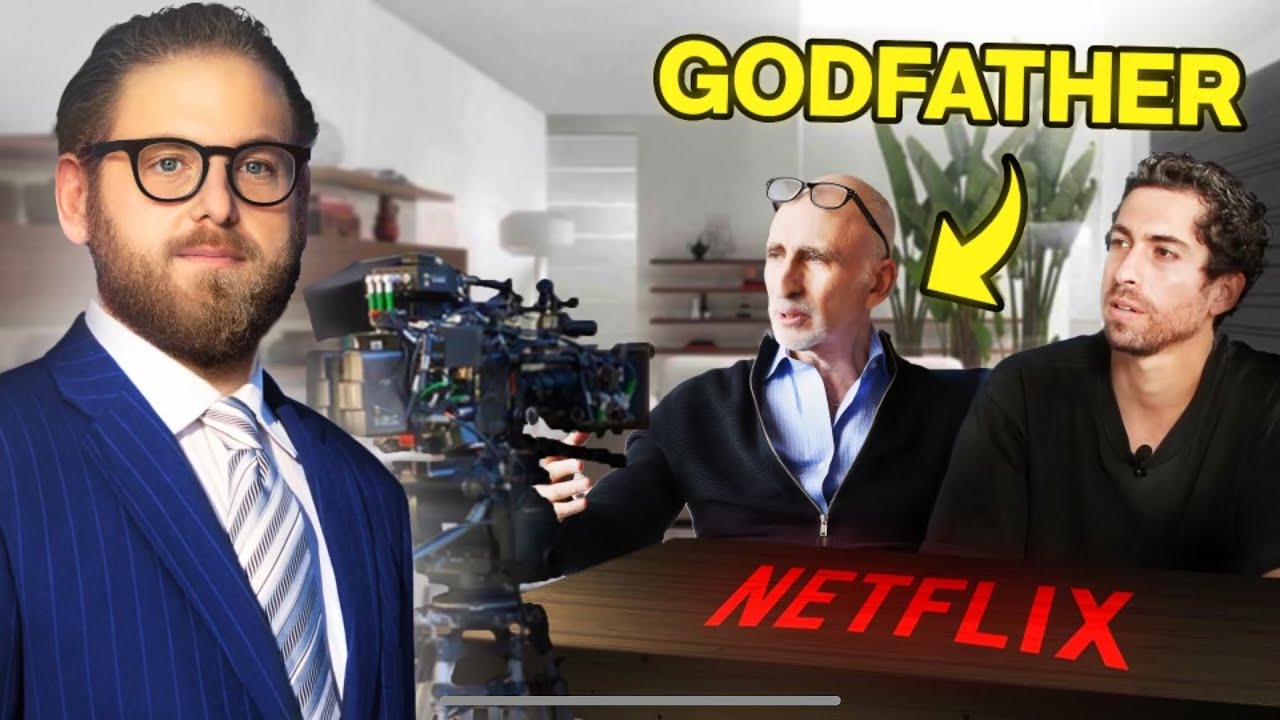
- This episode features a conversation between the host, his father Barry Michaels, and his godfather Phil Stutz — two influential therapists whose visualization-based methods have helped CEOs, actors, and other high-profile clients. The discussion ranges from the nature of self-examination and the shadow, to critiques of modern therapy and capitalism, to esoteric philosophy, the meaning of vulnerability, and how to live a courageous life in a chaotic world.
Phil Stutz’s Background and Approach
- Phil Stutz graduated from City College in New York, received his MD from NYU, and worked as a prison psychiatrist on Rikers Island for five years before moving his private practice to Los Angeles in 1982.
- In his early 30s, he was struck by chronic fatigue syndrome — extreme, constant exhaustion that left him barely able to get out of bed. This breakdown was strangely generative: he discovered the turn-of-the-century Austrian philosopher Rudolf Steiner, who came to define his worldview and deeply influence his therapeutic practice.
- Phil’s core philosophy centers on giving patients something concrete to work with in every session — a tool, a visualization, a specific action — rather than letting therapy become open-ended, masturbatory talk. He believes most traditional talk therapy is ineffective because it lacks articulated goals and roadmaps.
- He was the subject of a Netflix documentary called Stutz, directed by Jonah Hill, which significantly increased public awareness of his work and led to a flood of calls from prospective patients.
Barry Michaels and the Development of the Tools
- Barry Michaels, the host’s father, is Phil’s longtime business partner who helped develop and communicate Phil’s ideas to the world. Together they wrote the New York Times bestsellers The Tools and Coming Alive.
- Their practice involves mental visualizations for facing daunting everyday situations. Unlike traditional cognitive behavioral therapy, these visualizations incorporate archetypal Jungian symbolism.
- Barry was inspired by a simple conviction: no patient should leave a session without something — whether conceptual or practical — to work with. He sees this as fundamentally opposed to the Freudian model, which he views as unfalsifiable and therefore easily monetized but therapeutically hollow.
- He draws a fault line in modern therapy and self-help: on one side, a state-power-driven, consumerist, scalable model that treats practitioners as interchangeable cogs; on the other, an idiosyncratic, empowering, almost subversive approach that gives real agency to the patient.
The Shadow: The Most Powerful Tool
- Barry identifies working with the shadow as the most impactful tool he and Phil have developed over the past five years, both for himself and for patients.
- The shadow is the unwanted, inferior side of your personality — whatever you feel ashamed of or embarrassed by. The practice involves talking to it daily, letting it talk back, and discovering that it knows things you don’t know.
- He gives a striking example: with an unemotional accountant who wouldn’t open up, Barry turned to his own shadow in exasperation. The shadow said “look at his eyes.” Barry saw the vision of a tear, told the patient he sensed immense sadness, and the patient burst into tears and opened up completely.
- The shadow work is unpredictable and exciting because it can lead in any direction — unlike more structured tools like the reversal of desire, which reliably helps people do difficult tasks but doesn’t surprise.
- Barry argues that both are necessary: people need tools to act with agency in the world, and they need shadow work to prevent the shadow from revolting under the pressure of being a relentless taskmaster to oneself.
Self-Examination vs. Narcissism
- Phil traces his therapeutic calling to a family culture of self-examination — perhaps too much of it. He had to learn to “shut the f*** up and enjoy life” rather than analyzing every thought and urge.
- The line between meaningful self-examination and narcissism is purpose: if the goal is to have a positive impact on the people and world around you, it’s healthy. If it becomes self-examination for its own sake, it’s disguised narcissism.
- He is critical of what he sees as the Boomer therapeutic ethos — an endless frontier of self-optimization that can become a bottomless smorgasbord of self-soothing activities that never actually resolve unhappiness.
- He also critiques the tendency to believe one must fully heal childhood wounds before engaging with the real world. For most people, he believes, problems get solved in the real world as they occur, using new tools to address them.
Rudolf Steiner’s Influence
- Rudolf Steiner (1861–1925) was an Austrian philosopher who broke from theosophy to found anthroposophy — a form of spiritual science. He was also the father of organic farming.
- What sets Steiner apart, in Barry’s view, is that he takes a psychological view of the human being but embeds it in a larger epistemology that includes spiritual forces surrounding the person. He is the only thinker Barry has studied who seriously examines the interplay between external spiritual forces and internal psychology.
- Steiner made predictions roughly 100 years ago that Barry finds remarkably accurate: that education would become almost impossible because children would be so narcissistic they couldn’t listen, and that true strong leadership would be nearly impossible for the same reason — “me me me me me.”
- Steiner used the beehive as a model of holistic, connected organization — a superorganism — in contrast to wasps, which operate as disconnected individuals. Barry sees this as a model for what modern society lacks.
- Barry also references Steiner’s view of Christ not as a teacher but as a man of action — specifically, the crucifixion as an act that forgave the karma of the entire human race (not individual sins). Steiner carved a wooden sculpture depicting Christ between two polar forces — Ahriman (dull, bureaucratic, materialistic evil) and Lucifer (manic, self-referential, performative evil) — holding them apart.
Evil, Ideology, and Human Nature
- Barry’s model of human nature holds that there is both a lower, depraved, animal-like part and a higher, divine, inspired part. The key is free will practiced constantly.
- He references Rudolf Steiner’s concept of two poles of evil: Luciferic (manic, performance-oriented, self-referential) and Ahrimanic (dull, bureaucratic, tyrannical). Christ, or the third force, is the balancing figure between them.
- Barry argues that any viable ideology must recognize the existence of human evil and have mechanisms to deal with it. Marxism, for all its diagnostic power about labor and value, was fantastical in its prognosis — assuming workers would automatically correct the system once they understood it. This is the myth of self-regulation.
- He sees the same pattern repeating: the most altruistic-sounding philosophies (utilitarianism, Marxism) are the most dangerous because they can be implemented at mass scale, and they fail to account for the human capacity to corrupt even the best systems.
The Law of Attraction and Manifestation
- Barry acknowledges that wanting things and working toward them is important, but he sees a major problem with the law of attraction as commonly espoused: it does not acknowledge the existence of evil. No amount of vision-boarding would have saved German Jews in the 1930s.
- He detects a hidden arrogance in the idea that what you want matters that much in the larger scheme of the universe. Some things — good fortune and bad fortune — will happen to you regardless of what you attract.
- He also critiques the occult, witchy séance quality of some law-of-attraction practice, where you repeat affirmations until they manifest. This can reflect a lack faith in the delightful randomness of life, which might bring something better than you can conceive of, or something that seems awful but turns out to be a great lesson.
- The host raises the question of whether there’s something beyond the law of attraction — a purity of internal orientation that affects whether you actually get what you want. Barry doesn’t directly endorse this but emphasizes that deprivation creates motivation and that cutting off lower desires can create space for something higher.
Courage, Vulnerability, and the Unknown
- Barry defines the highest species of courage as the ability to walk into the unknown without any guarantees and keep going — not to get a good result, but simply to keep going.
- He encourages the host to develop a relationship with the most vulnerable side of himself — the part capable of awe and reverence, the counter-masculine side. This means talking to it daily, letting it make decisions sometimes, and seizing moments of vulnerability instead of pushing them away.
- The host reflects on his time at Google, when he was depressed and lost. He let go entirely, started doing what he felt like doing day to day, and listened to his inner voice — which told him to go to random movies, walk to random places in San Francisco. This led him down an unpredictable path to where he is today, which he’s grateful for.
- Barry admires the host’s courage to consult his shadow and follow it, noting that this courage doesn’t guarantee getting what you want but pays off in life satisfaction.
Critique of Success and Convention
- Barry notes that the most successful people he treats have only one thing in common: they take massive numbers of action steps, far more than most people, and not all of them pay off. They are not necessarily the deepest or happiest people.
- The host observes that many self-help authors who preach rigid daily routines seem to end up in a tier of middling success. The greatest artists and thinkers — Nietzsche, Kubrick, Linklater — often had unconventional, even bizarre lifestyles and tapped into something beyond convention.
- Barry agrees that convention has limits and that the most successful people he knows have submitted to some higher spirit or life force flowing through them. But he also notes counterexamples like Jeff Bezos, who claims to start his day at 10 a.m. — though this may be strategic misdirection.
- Both agree that the ultra-rich are not paradigms of happiness or mental health. Many are on a hedonic treadmill, accumulating without purpose, and don’t know what to do with their money.
Media, Vulnerability, and the Host’s Creative Path
- The host reflects on the difficulty of putting himself out there — starting a YouTube channel, doing something cringeworthy, and pushing through the embarrassment. He didn’t have social media until about a year ago and still hates it.
- Barry insists that fulfilling your potential requires doing cringeworthy things. The host references Ira Glass’s observation that early creative work contains a kernel of real truth buried in material that isn’t yet good — and you have to carve it out by doing the thing over and over.
- Barry connects this to the shadow: what makes vulnerability cringeworthy is that you’re revealing parts of yourself you’ve never revealed before. By revealing them, you accept them.
- The host wants to make the show more vulnerable — less about heady ideas and more about himself — but resists because he doesn’t want to come across as a garden-variety millennial narcissist complaining about a life that is actually very good.
- Barry’s advice: record the vulnerable material even if you don’t release it. Give that part of yourself a venue every day for six months. It will feel scary but ultimately good, and it will attract the right people.
- The host feels drawn to a Hunter S. Thompson-style road trip across the US, documenting strange and out-there things — a travel log that’s also an inner journey.
The State of the West and the World
- The host asks whether the West is in a kind of civilizational suicide or burnout, referencing big-history thinkers like Oswald Spengler, René Guénon, and Julius Evola who predicted Western decline.
- He observes that people in Los Angeles seem anxious and obsessed with things like their microbiome, while an uncontacted tribe in Papua New Guinea probably has a great microbiome but never talks about it and doesn’t suffer from existential angst.
- Barry’s response is that the tools are not about telling you the universe is one way or another — they’re about taking adversity, obstacles, and messed-up thought processes and transcending them to get something out of them.
- For someone feeling hopeless, Barry’s first-line tool is “loss processing” — a procedure for letting go of your investment in a specific result and valuing your effort irrespective of results. Most human beings get too invested in getting the results they want, which makes them hedge their bets, try less hard, and find that even when they get the result, it’s never as satisfying as expected.
- He also advocates a humble, process-oriented view of life: visualize yourself on the basement floor of a gigantic skyscraper, stamping papers and passing them along. You don’t have access to the top floor where decisions are made. There’s enormous relief in accepting that you’re a worker among workers, and that the timing of when things click is different for everyone.
Final Reflections
- Barry channels Rudolf Steiner in response to a question about the host’s show: the show is an aberration in the game plan of someone born too ambitiously. That ambition had to be worn down, corrected, reworked — through events that felt like losses or failures but actually gave the host an independent ability to judge facts and suppositions, and a pleasure in bringing that to the public.
- Barry says the host has lost his most annoying quality — a holier-than-thou attitude — and now understands the secret: “you don’t know shit,” and nobody can make these decisions for you.
- The future of the show, in terms of cultural and spiritual impact, will become apparent if the host continues to weaken or nullify his own ego. The answer will come from inside, not through any overt conscious thought process.