-
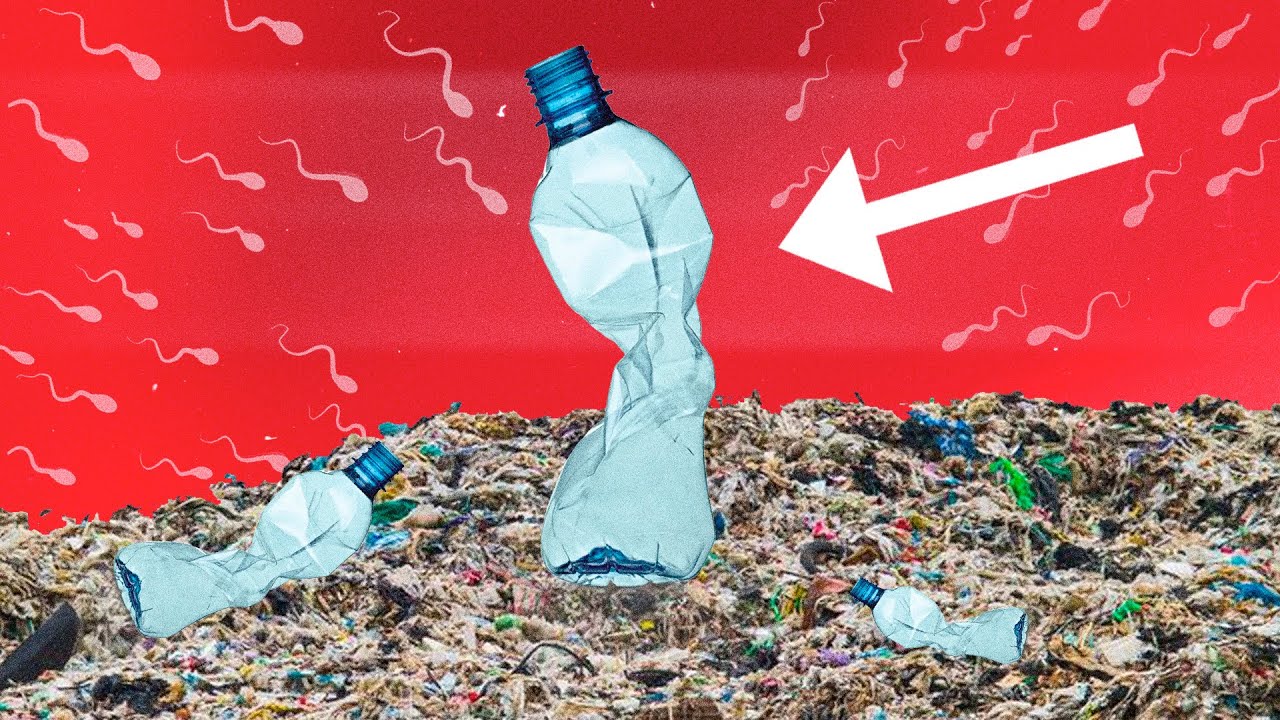
The central subject is a silent, decades-long decline in male reproductive health driven by ubiquitous chemical exposures. Dr. Shanna Swan, a reproductive epidemiologist at Mount Sinai, has spent decades documenting how industrial chemicals — especially phthalates and pesticides — are driving a roughly 59% decline in sperm count and a 1% annual drop in testosterone since the 1970s. Her book Count Down argues this is a population-level crisis with consequences for fertility, IQ, development, and longevity, and that it has been largely ignored because the exposures are invisible and the outcomes are hidden.
-
The core mechanism is prenatal testosterone disruption by phthalates.
- During the early first trimester, a critical window of fetal development, phthalates can suppress the testosterone a male fetus needs to fully masculinize.
- This produces a cluster of subtle but measurable changes — shorter anogenital distance (AGD), smaller penis size, higher rates of undescended testicles — collectively called “phthalate syndrome,” first identified in animals and now confirmed in humans.
- Shorter AGD is a reliable proxy for lower sperm count, which in turn is associated with higher risks of heart disease, diabetes, testicular cancer, and shorter life expectancy.
- The effects are subtle at the individual level — affected babies look normal — but dramatic at the population level.
-
The evidence base is built on multi-city studies with tight quality control.
- In the early 1990s, after a 1992 Danish study first flagged declining sperm counts, Swan replicated the design across four U.S. cities with different environments.
- Men in agricultural Central Missouri had roughly half as many moving sperm as men in Minneapolis, and pesticide exposure was significantly linked to lower counts.
- A parallel European study independently found similar geographic patterns.
- Later, using stored urine samples from pregnant women, Swan’s team confirmed the phthalate syndrome exists in humans: higher maternal phthalate levels correlated with shorter AGD in male infants.
- At the University of Rochester, paid college students provided urine, blood, and measurements showing that shorter AGD predicted lower sperm count.
-
The fertility implications are already severe.
- Average sperm concentration has dropped to about 47 million per milliliter; Swan cites 40 million/mL as a rough threshold below which conception becomes difficult.
- Studies tracking couples trying to conceive show the probability of conceiving per cycle drops sharply below 40 million/mL and approaches zero quickly.
- This compounds with the trend of delayed childbearing, since both sperm and egg quality decline with age.
- Swan warns that current fertility rates (1.78 in the U.S., well below the 2.1 replacement level, and as low as 0.9 in South Korea) may not be reversible.
-
Female reproductive decline is real but understudied.
- Premature ovarian failure and declining ovarian reserves are increasing, but the data are far more limited than for sperm.
- Until roughly five years ago, there was no requirement to include women in research studies, creating a major gap in understanding female-side effects.
-
The exposure sources are pervasive and hard to avoid.
- Phthalates are plasticizers found in soaps, perfumes, colognes, packaging, pharmaceuticals, food-processing tubes (including milking equipment), and fragranced products of all kinds.
- Bisphenol A lines tin and soda cans.
- Pesticides like glyphosate are widespread in conventional food production.
- Swan’s practical advice: prioritize organic and unprocessed food, avoid microwaving in plastic, choose fragrance-free detergents and cleaning products, and check plastic recycling codes (1 and 2 are safer; avoid others).
- She is pessimistic about outright bans in the U.S. within her lifetime but points to the EU, which bans 1,100 chemicals from personal care products versus 11 in the U.S.
-
The downstream consequences extend beyond reproduction.
- Prenatal phthalate exposure is also linked to lower IQ, poorer language development, and more developmental problems.
- Rising erectile dysfunction and increasing testosterone use among young men create a paradox: supplemental testosterone actually further suppresses sperm production.
- Swan frames this as a “hidden epidemic” — the exposures are silent (you can’t sense them without testing), and the outcomes are stigmatized and rarely discussed.
-
Demographic and technological futures are uncertain.
- Countries like Japan, South Korea, and China already face very low fertility rates, and economic incentives to raise birth rates have not worked.
- Demographers in the book Empty Planet project global population peaking around 2040, then declining permanently, because once women gain education and workforce participation they do not return to high fertility.
- Swan is cautiously hopeful that assisted reproduction, egg and sperm freezing (ideally before 35 for women), and emerging technologies like synthetic gametes (studied by researchers such as Evelyn Telfer in Scotland) may help, but these are expensive and raise environmental justice concerns.
- She urges people to modify personal behaviors, demand safer products, and push for better regulation as the most realistic path forward.