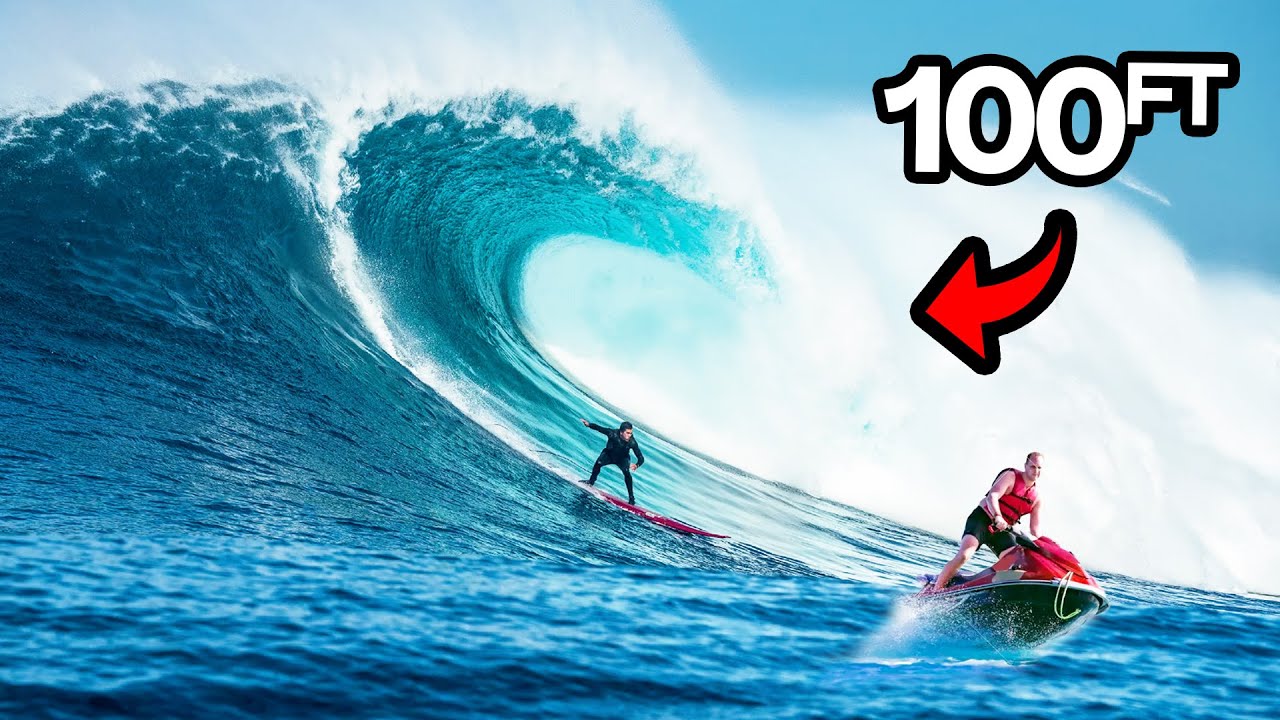
- This episode profiles Garrett “G Mac” McNamara, one of the greatest big wave surfers of all time, whose career arc took him from a difficult childhood in Hawaii to setting the world record for the biggest wave ever surfed — and eventually stepping away from the sport entirely.
Early life and path to surfing
- Grew up in a chaotic, often violent household on Oahu’s North Shore; his mother was a single parent who moved the family frequently.
- Surfing became an escape and identity early on; he was drawn to big waves as a teenager and began chasing them seriously in his late teens and early twenties.
- Spent years as a relatively unknown waterman, working odd jobs and paddling into waves that others wouldn’t attempt, building a reputation in underground big wave circles.
Breakthrough at Jaws (Peʻahi)
- In 2003, he surfed what is considered one of the greatest waves ever ridden at Jaws (Peʻahi) in Maui — a massive, clean, barreling left-hand wave captured on film.
- This ride put him on the map in the surfing world and demonstrated that paddle-in surfing at extreme sizes was possible, not just tow-in.
Nazare, Portugal — discovering a monster
- McNamara was among the first surfers to recognize the potential of Nazare, Portugal, where an underwater canyon amplifies Atlantic swells to extraordinary heights.
- He helped put Nazare on the map as a premier big wave surf spot, making multiple trips there and progressively riding larger and larger waves.
- The Nazare project involved assembling a safety team, developing new equipment, and learning how the unique bathymetry of the canyon creates waves far bigger than anywhere else in Europe.
The world record wave (2013)
- In January 2013, at Nazare, he surfed a wave measured at approximately 100 feet, breaking the world record for the largest wave ever surfed.
- The ride was both a triumph and a near-death experience — he was violently wiped out and had to be rescued by his safety team.
- The record brought massive media attention, including the HBO docuseries 100 Foot Wave, which chronicled his Nazare campaigns.
Physical and psychological toll
- Big wave surfing at this level carries extreme risk: hold-downs, compression injuries, and the constant possibility of drowning.
- McNamara describes the mental side — the fear, the obsessive preparation, and the way the ocean humbles even the most experienced surfers.
- Over time, the cumulative injuries and the intensity of the lifestyle began to take a serious toll on his body and mind.
Stepping away from competition
- After years of pushing the limits, he made the decision to step back from professional big wave surfing.
- He has spoken about the difficulty of walking away from something that defined his identity, and the challenge of finding purpose beyond the pursuit of bigger and bigger waves.
- His story raises questions about what drives people to risk everything, and what happens when that chapter ends.
Legacy and broader significance
- McNamara’s career helped redefine what was considered possible in surfing — from paddle-in big wave riding to the discovery and development of Nazare.
- He is regarded as a pioneer who bridged the gap between traditional big wave surfing and the modern era of tow-in, jet-ski-assisted, and aerodynamically enhanced big wave pursuits.
- His willingness to share both the glory and the cost of his journey has made him a compelling figure well beyond the surfing community.